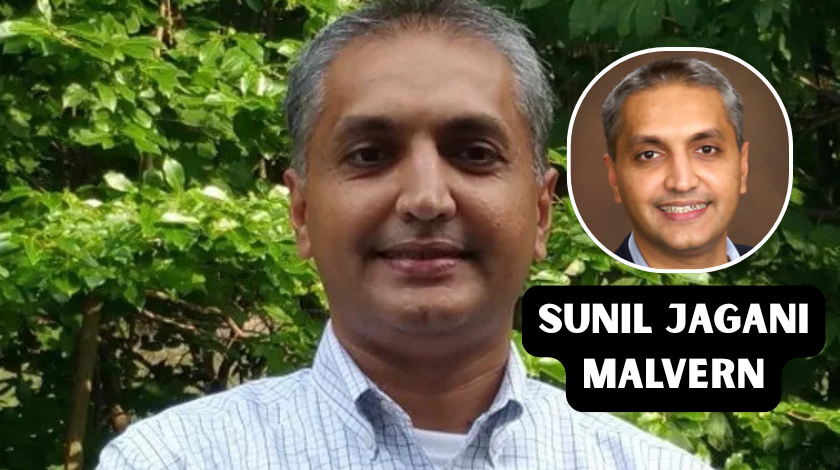

I still remember the first time I walked into a tech company’s office in Malvern, Pennsylvania. I expected the usual Silicon Valley pretension—foosball tables, bean bags, and people throwing around buzzwords they barely understood. Instead, I found something different at AllianceTek. The founder, Sunil Jagani, greeted me in a simple conference room with a whiteboard full of actual business problems, not technical jargon. That was fifteen years ago, and I’ve been watching his work ever since.
Sunil Jagani isn’t your typical tech CEO. He doesn’t chase headlines or make grandiose predictions every other Tuesday. Instead, he’s spent the last twenty years building AllianceTek into something increasingly rare in the software development world: a company that actually delivers what it promises. Based in Malvern, a Philadelphia suburb most people couldn’t find on a map, Jagani has built a global operation spanning three continents and serving clients ranging from scrappy startups to Fortune 500 companies.
The Unlikely Path from Graduate Student to Founder
Jagani’s story starts where many American tech success stories do—in a university classroom. He earned his Master’s degree in Software Engineering from Pennsylvania State University’s Great Valley Graduate Center in 2004. At the time, the tech industry was still recovering from the dot-com bust. Jobs were scarce, competition was fierce, and the idea of starting your own software company seemed almost foolish to most people.
But Jagani saw something different. While working as a lead application developer at various firms, he noticed a persistent gap between what businesses actually needed and what technology companies were selling them. The industry was obsessed with features—adding more buttons, more functions, more complexity. Meanwhile, business owners were drowning in software that didn’t talk to their existing systems, required expensive training, and solved problems they didn’t actually have.
In 2004, Jagani leaped. He founded AllianceTek from essentially nothing—no venture capital backing, no celebrity co-founders, just a clear philosophy that technology should serve business goals, not the other way around. Looking back, that bootstrapped approach probably saved the company. When you’re spending your own money and eating what you kill, you learn quickly to listen to clients rather than lecture them.
Building Something Real in Malvern
Here’s what strikes me about AllianceTek’s headquarters location. Malvern, Pennsylvania, isn’t exactly a tech hub. It’s a quiet suburb about 30 miles west of Philadelphia, known more for its train station and historic downtown than its startup culture. Jagani could have relocated to San Francisco, Austin, or at least Center City Philadelphia. He stayed put.
That decision says a lot about his business philosophy. AllianceTek wasn’t trying to be the next unicorn startup with a foosball table and kombucha on tap. It was trying to be a sustainable, profitable business that solved real problems. The Malvern location kept overhead reasonable and allowed the company to focus resources on hiring great developers rather than paying San Francisco rents.
Over the past 20 years, that approach has paid off. AllianceTek now operates with teams across the United States, Australia, and India—a global delivery model that allows them to provide round-the-clock development and support. But the headquarters remains in Malvern, and Jagani remains actively involved in day-to-day operations as President and Chief Technology Officer. In an era where many founders cash out and move on after five years, that’s notable.
What AllianceTek Actually Does (And Why It’s Different)
If you visit AllianceTek’s website, you’ll see the usual list of services: custom software development, mobile apps, cloud solutions, business process automation, CRM implementation, and legacy system migration. Nothing revolutionary there. But talk to their clients, and you’ll hear something different.
Jagani has built a reputation for being the guy who will tell you when you DON’T need something. In an industry built on selling the latest technology, that’s almost radical. I’ve heard stories of potential clients coming in wanting to build expensive AI systems or blockchain solutions, only to have Jagani’s team talk them down to simpler, more effective approaches that cost a fraction of the price.
This isn’t altruism—it’s good business. AllianceTek survives on long-term relationships and referrals, not one-off projects. When clients succeed, they come back. When they blow their budget on unnecessary technology, they don’t.
The company’s service model reflects this philosophy. Rather than pushing clients toward pre-built solutions, AllianceTek emphasizes custom development tailored to specific business processes. They use agile methodologies, which means clients see progress every few weeks rather than waiting months for a big reveal. And they specialize in integration—making new software talk to old systems rather than forcing businesses to rip everything out and start over.
The Agentic AI Moment
In early 2025, Jagani made headlines in tech circles with his unveiling of “Agentic AI”—autonomous intelligence systems that don’t just respond to prompts but actually take initiative to accomplish goals. Unlike the chatbots that dominated the early AI hype cycle, agentic systems can plan, execute multi-step tasks, and adapt when things go wrong.
This wasn’t just another press release. Jagani had been working on autonomous systems for years, long before ChatGPT made AI a dinner table conversation. His approach to agentic AI reflects his broader philosophy: the technology needs to solve business problems, not create new ones. That means systems that integrate with existing workflows, maintain security and compliance standards, and provide clear accountability for decisions.
What interests me about Jagani’s AI work is his simultaneous skepticism about AI hype. While he’s developing cutting-edge autonomous systems, he’s also been vocal about the inevitability of an “AI winter”—a cooling-off period in which investment dries up, and many AI companies fail because they promised more than they could deliver. This isn’t contrarianism for its own sake; it’s the perspective of someone who’s been through multiple technology cycles and knows the difference between sustainable innovation and speculative bubbles.
Demystifying Technology for Real People
One of Jagani’s most valuable contributions is his ability to explain complex technology in terms that non-technical business owners can actually understand. Take blockchain, for example. While crypto enthusiasts were selling NFTs and speculative coins, Jagani was writing about blockchain’s actual utility for supply chain transparency, contract verification, and secure record-keeping.
This educational approach extends to how AllianceTek works with clients. They don’t just deliver software and disappear; they teach teams how to use it, maintain it, and think strategically about technology. In an industry notorious for creating dependency—where you’re stuck paying consultants forever because no one else understands your system—that’s refreshing.
Jagani’s appearance on the GoodFirms Roundtable Podcast in 2023 showcased this teaching approach. Rather than pitching AllianceTek’s services, he spent the interview discussing common app development mistakes, the importance of market research before building an MVP, and how to evaluate development partners. The advice was practical, specific, and clearly born from two decades of seeing projects succeed and fail.
The Local Impact We Often Miss
It’s easy to focus on the global aspects of AllianceTek’s business—the international teams, the enterprise clients, the cutting-edge technology. But I think Jagani’s impact on the Malvern area and greater Philadelphia region deserves more attention.
Pennsylvania isn’t typically mentioned alongside California, Washington, or New York when people discuss tech employment. But companies like AllianceTek create high-paying jobs for software engineers, project managers, and business analysts right here in the Philadelphia suburbs. They hire locally, pay well, and contribute to a tech ecosystem that keeps talented graduates from immediately fleeing to the coasts.
Beyond direct employment, AllianceTek’s success has a multiplier effect. Their clients—often small and mid-sized businesses in the region—become more competitive when they have better technology. A local manufacturer that automates its inventory management competes more effectively against overseas rivals. A regional healthcare provider with a custom patient portal delivers better care. The technology success of one Malvern company ripples outward, strengthening the entire regional economy.
Lessons for the Rest of Us
After following Sunil Jagani’s career for years and studying how AllianceTek operates, there are lessons here that extend far beyond software development.
First, location matters less than execution. You don’t need to be in San Francisco to build a successful tech company. You need to be in a place where you can hire good people, keep costs reasonable, and stay focused on customers rather than investors.
Second, longevity is underrated. In a startup culture obsessed with rapid exits and unicorn valuations, there’s something powerful about building a business slowly, profitably, and sustainably over twenty years. AllianceTek has survived economic downturns, technology shifts, and competitive threats because it was built on fundamentals rather than hype.
Third, expertise requires both depth and breadth. Jagani didn’t become a thought leader by specializing in a single technology. He developed strong technical skills while learning how businesses actually operate, how budgets work, and how decisions are made. That combination—understanding both the code and the context—is rare and valuable.
Fourth, contrarian thinking requires conviction, not just contrariness. Jagani’s skepticism about AI hype isn’t about being negative; it’s about protecting clients from bad investments and building systems that actually work. You can be optimistic about technology’s potential while being realistic about its limitations.
Looking Forward
At this point in his career, Sunil Jagani could easily step back. AllianceTek runs well, the team is established, and the company has a solid market position. But from everything I can see, he’s still actively involved—still reviewing architecture decisions, still meeting with clients, still writing about technology trends.
His recent work on agentic AI suggests he’s not done innovating. As artificial intelligence evolves from novelty to infrastructure, the companies that thrive will be those that can implement it responsibly, securely, and effectively. That’s exactly the kind of practical, business-focused approach Jagani has spent twenty years perfecting.
For businesses looking to digital transformation, the lesson is clear: find partners who listen first, who have survived multiple technology cycles, and who care more about your success than their next press release. They’re rarer than you’d think, but they exist—even in unexpected places like Malvern, Pennsylvania.
Conclusion
Sunil Jagani represents a different model of technology leadership—one that prioritizes sustainable business value over hype cycles, client relationships over rapid scaling, and practical solutions over technological complexity. From his base in Malvern, Pennsylvania, he has built AllianceTek into a global operation that serves as a model for how technology consulting should work: with expertise, integrity, and a genuine commitment to client success. As businesses navigate the complex landscape of AI, automation, and digital transformation, leaders like Jagani provide something increasingly valuable—not just technical capability, but the wisdom to know when to use it and when to keep things simple.
Frequently Asked Questions (FAQ)
Who is Sunil Jagani? Sunil Jagani is the President and Chief Technology Officer of AllianceTek, a software development and IT consulting company based in Malvern, Pennsylvania. He founded the company in 2004 and has over 27 years of experience in technology leadership and software engineering.
What is AllianceTek? AllianceTek is an international IT solutions and software development company founded by Sunil Jagani. Headquartered in Malvern, PA, the company provides custom software development, mobile applications, cloud solutions, business process automation, and digital transformation consulting to clients ranging from startups to enterprise organizations.
Where is Sunil Jagani based? Sunil Jagani is based in Malvern, Pennsylvania, a suburb located approximately 30 miles west of Philadelphia. AllianceTek maintains its headquarters in Malvern while operating global delivery teams across the United States, Australia, and India.
What is Agentic AI according to Sunil Jagani? Agentic AI refers to autonomous artificial intelligence systems that can plan, execute multi-step tasks, and adapt to changing conditions without constant human prompting. Jagani has been developing these systems to solve practical business problems rather than simply responding to queries, as traditional chatbots do.
What did Sunil Jagani study? Sunil Jagani earned his Master’s degree in Software Engineering from Pennsylvania State University’s Great Valley Graduate Center in 2004. His educational background, combined with practical development experience, formed the foundation for his approach to business technology.
What is Sunil Jagani’s view on AI Winter? Jagani has predicted that an “AI Winter”—a period of reduced investment and interest in artificial intelligence due to unmet expectations—is likely inevitable. He argues that current hype has led to overinvestment in AI solutions that promise more than they can deliver. Businesses should prepare for a correction while focusing on sustainable, practical AI implementations.