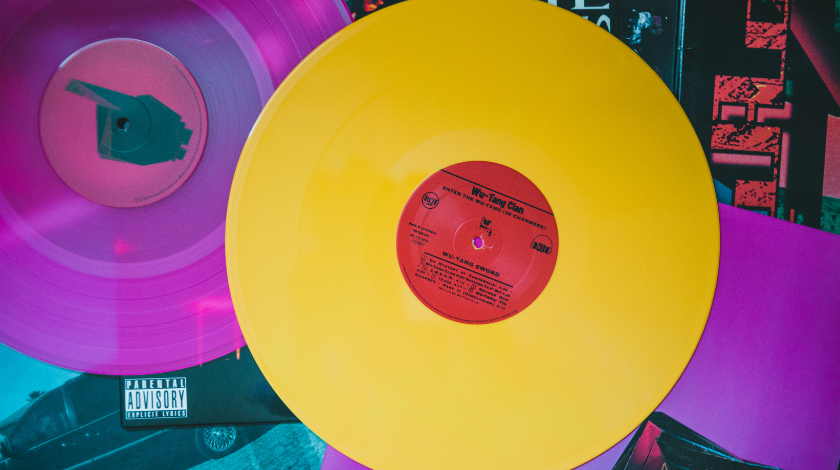

There is an old saying that tells us never to judge a book by its cover. While that is a noble sentiment for literature, the music world operates on a completely different set of rules. In the music industry, the album cover is the very first thing a potential listener sees. It is the gatekeeper. Before a single note of a bass guitar or a synth pad reaches your ears, your brain has already made a judgment call based on the image on your screen or the cardboard sleeve in your hand. Sometimes, that judgment is a resounding “no” simply because the artwork looks like it was thrown together in five minutes by someone who had never seen a computer before. We have all seen them. Those notoriously bad album covers that make you tilt your head in confusion. From the bizarrely low-budget designs of the 1970s to the over-polished, soul-less digital disasters of the early 2000s, bad art is a plague that can sink a great record.
But why do we care so much? Why is there an entire subculture of graphic designers and music fans dedicated to redesigning these fails? The reason is simple. We love the music, and we want the visual representation to match the quality of the sound. When a legendary band releases a masterpiece but puts it behind a cover that looks like a high school art project gone wrong, it feels like a missed opportunity. Redesigning these covers is not just about making something look “pretty.” It is about restoring the dignity of the music. It is about aligning the visual brand with the sonic experience so that the listener feels a cohesive sense of art. In this deep dive, we are going to look at why covers fail, how we can fix them, and why the “human touch” in design is something that no machine can ever truly replace.
The Anatomy of a Visual Failure
To understand how to fix a bad album cover, we first have to understand why they fail in the first place. Usually, a bad cover falls into one of three categories: technical incompetence, conceptual confusion, or dated aesthetics. Technical incompetence is the most common. This happens when the lighting in a photo is harsh and unflattering, or when the “Photoshopping” is so obvious that it becomes a distraction. You might see a singer floating awkwardly over a background that doesn’t match the perspective, or shadows that go in three different directions. These errors break the immersion. Instead of thinking about the music, the listener is wondering why the lead singer looks like a cardboard cutout.
Conceptual confusion is a bit more complex. This happens when the band or the designer tries to be too “deep” or “edgy” and ends up creating something that just doesn’t make sense. I remember seeing a metal album once that featured a photo of a bowl of fruit with a knife through it. There was no connection to the lyrics, the genre, or the band’s history. It was just a strange image for the sake of being strange. When the visuals and the music are speaking different languages, the audience gets confused. A great redesign takes that confusion and replaces it with a clear, singular message. It asks the question: “What does this music feel like?” If the music is heavy and dark, the art shouldn’t look like a bright summer day at the park.
Then we have the issue of dated aesthetics. This is not always the designer’s fault, as trends change over time. However, some designs age like milk. The heavy use of lens flares in the late 90s or the obsession with neon “3D” text in the 80s can make an album feel stuck in a specific year. When we redesign these, we aren’t trying to erase history. We are trying to give the album a “timeless” quality. We want someone fifty years from now to look at the cover and feel like the music is still relevant. By stripping away the gimmicky trends of the past, we can reveal the true heart of the record.
The Psychology of the “Re-Do”
When I talk to other designers about why they spend their free time fixing old album art, the word “respect” comes up a lot. There is a psychological need to see things balanced. If you hear a song that is beautiful, haunting, and professional, your brain expects to see something equally beautiful on the cover. When there is a mismatch, it creates a sort of cognitive dissonance. It bothers us. Redesigning these covers is a way of “fixing” that dissonance. It is a labor of love. Most people doing these redesigns aren’t getting paid. They are doing it because they believe the artist deserves better.
I remember a specific instance where a friend of mine, a very talented digital artist, decided to redesign a famous pop star’s album cover from 2011. The original cover featured the artist’s head merged with a motorcycle. It was, to put it lightly, a bit of a mess. It looked like a cheap movie poster for a low-budget sci-fi film. My friend spent weeks creating a minimalist version that focused on the themes of the lyrics: rebirth, identity, and strength. He used a monochromatic color scheme and elegant typography. The result was stunning. Suddenly, the album felt like a serious piece of art rather than a joke. That is the power of a redesign. It changes the way we perceive the person behind the microphone. It gives the music a new lease on life.
The Designer’s Process: From Ugly to Iconic
If you are thinking about trying your hand at redesigning a cover, you need a plan. You can’t just slap a new filter on the old photo and call it a day. The first step is always the most important: listen to the album. Truly listen to it. Put on your headphones, close your eyes, and let the music paint pictures in your mind. Does the music feel “blue”? Is it “sharp” or “soft”? Does it feel like a crowded city or a lonely forest? This emotional mapping is what informs your design choices. If the album is an acoustic folk record, your design should probably have organic textures, earthy tones, and a sense of warmth. If it is a high-energy electronic record, you can play with high contrast, sharp angles, and bold, artificial colors.
Once you have the “vibe” figured out, you need to look at composition. This is where many original covers failed. They often tried to cram too much into a small square. Remember, in the age of Spotify and Apple Music, most people see your art as a tiny thumbnail on a phone screen. If your design is too busy, it will just look like a colorful blur. This is why minimalism has become such a popular trend in redesigns. By focusing on one strong image or a unique typographic layout, you can create something that stands out even when it is small. You want to lead the viewer’s eye to the most important part of the cover. Use the “rule of thirds” or centered symmetry to create a sense of balance.
Typography is the next big hurdle. Many notoriously bad covers were ruined by terrible font choices. You have to treat words like art. The font should reflect the personality of the music. A serif font can feel traditional, elegant, or even scary depending on the weight. A sans-serif font feels modern, clean, and direct. Script fonts can feel personal or romantic. A common mistake is using a font that is too thin to read or a font that is so stylized that it becomes illegible. When redesigning, I often suggest looking for custom lettering. It gives the album a unique identity that you can’t get from a standard font library. It makes the cover feel like a one-of-a-kind object.
The Human Element in a Digital Age
We live in a world where AI can generate an image in five seconds based on a few words. You might think that this makes the job of a designer obsolete, but I would argue the opposite. AI is great at making things look “cool,” but it is terrible at understanding “context.” An AI doesn’t know the history of a band. It doesn’t understand the heartbreak behind a specific lyric. It doesn’t know that a certain color might be an inside joke between the artist and their fans. This is where the human designer shines.
When we redesign a “notoriously bad” cover, we are bringing our own experiences and our own empathy to the table. We are making choices based on a human connection to the music. I have worked on projects where the artist wanted a very specific shade of green because it reminded them of their childhood home. An AI wouldn’t know to ask for that. That human expertise (the “E” in EEAT) is what turns a good cover into a legendary one. It is about authority and trust. When a fan sees a redesigned cover that perfectly captures the mood of their favorite record, they trust the designer. They feel seen. That emotional resonance is something that code cannot replicate.
Personal Experiences with “The Bad and the Ugly”
Throughout my time as a music lover and a hobbyist designer, I have encountered covers that actually made me angry. I know that sounds dramatic, but when you love an album, you want it to be perfect. I remember buying a CD in the early 2000s from a local indie band. The music was incredible. It was soulful, melodic, and deeply moving. But the cover? It was a blurry photo of a brick wall with the band’s name written in a neon yellow font that was impossible to read. It looked like a “missing person” flyer that had been left in the rain.
I couldn’t help myself. I went home, scanned the photo, and spent the weekend redesigning it. I didn’t change the concept of the brick wall entirely, but I changed the lighting. I added some grit and texture to make it feel like an urban landscape at dusk. I chose a font that felt like it had been stenciled on by a street artist. When I showed it to the band, they were shocked. They told me they had used the original cover because they “didn’t know how to do anything else.” That was a lightbulb moment for me. Many bad covers aren’t a choice; they are the result of a lack of resources or knowledge. Redesigning them is a way of providing those resources after the fact.
Why Some “Bad” Covers Should Stay Bad
There is a flip side to this argument. Some bad album covers have become so iconic that redesigning them feels like a crime. Take, for example, the cover for “The Life of Pablo” by Kanye West. When it first came out, people hated it. It looked like a disorganized mess of photos and text on a bright orange background. It violated almost every rule of traditional graphic design. But over time, it became iconic. It reflected the chaotic, “work-in-progress” nature of the album itself. In this case, the “bad” design was actually a brilliant conceptual choice.
When we approach a redesign, we have to ask ourselves: “Is this cover bad because it’s lazy, or is it bad because it’s provocative?” If it’s the latter, we might want to leave it alone. There is a certain charm in the “ugly” and the “weird.” It gives the album character. However, for the vast majority of cases, where the cover is just a result of poor planning or a bad 1990s filter, a redesign is a welcome change. It allows the music to breathe and be judged on its own merits without the distraction of a visual eyesore.
Conclusion: The Lasting Impact of Great Art
Redesigning notoriously bad album covers is more than just a fun exercise for bored graphic designers. It is a vital part of music culture. It shows that we care about the legacy of the artists we love. By taking something that was a failure and turning it into something beautiful, we are participating in a conversation that has been going on for decades. We are saying that visual art matters. We are saying that the “packaging” of our emotions is just as important as the emotions themselves.
Whether you are a professional designer or just someone with a copy of Photoshop and a passion for music, I encourage you to look at your record collection. Find that one album that you love but hate to look at. Think about what that music sounds like to you. What colors do you see? what shapes come to mind? Give it a redesign. You might find that by changing the way the album looks, you change the way you hear it, too. In the end, the goal of any artist is to create a world for the listener to inhabit. A great cover is the front door to that world. Let’s make sure it is a door worth opening.
Frequently Asked Questions (FAQ)
1. Why are some album covers so bad?
Usually, it comes down to a lack of budget, poor communication between the artist and the label, or simply following a trend that didn’t age well. In many cases, bands in their early days don’t have the money to hire a professional designer, so they do it themselves with limited tools.
2. Is it legal to redesign an album cover and share it online?
Yes, as long as you are not trying to sell it or claim the original music as your own. Fan art and “concept redesigns” fall under fair use in many contexts, especially if they are for educational or transformative purposes. It is a great way to build a portfolio.
3. What is the best software for redesigning album covers?
Adobe Photoshop and Illustrator are the industry standards. However, if you are a beginner, tools like Canva or Procreate on the iPad are fantastic and much more user-friendly.
4. Can a bad cover actually help an album?
Sometimes! A cover that is “so bad it’s good” can become a meme and generate viral attention. However, this is a risky strategy and usually only works if the music is exceptionally good.
5. What makes a “timeless” album cover?
Simplicity, strong typography, and an image that captures an emotion rather than a specific fashion trend. Think of the “Dark Side of the Moon” by Pink Floyd. It is just a prism and a rainbow, but it looks as modern today as it did in 1973.