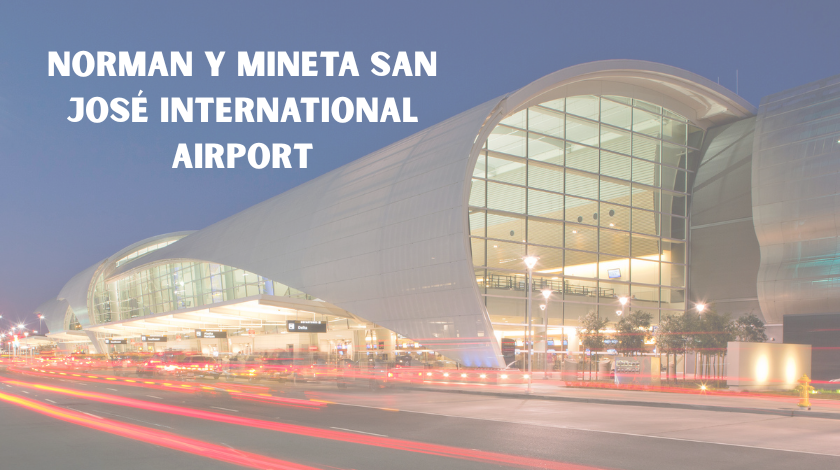
Norman Y. Mineta San José International Airport: The Complete Guide to Silicon Valley’s Gateway (2024-2025)

When you first see the full name “Norman Y. Mineta San Jose International Airport” on your boarding pass or GPS, you might wonder who this person was and why an airport carries his name. The story behind this naming is not just a footnote in local history—it is one of the most remarkable American narratives of resilience, public service, and bipartisan leadership you will ever encounter. Norman Yoshio Mineta was born in San Jose in 1931 to Japanese immigrant parents who ran a successful insurance agency. His childhood took a traumatic turn in 1942 when, at just ten years old, he and his family were forcibly removed from their home and sent to the Heart Mountain Relocation Center in Wyoming, one of the ten concentration camps where the United States government imprisoned approximately 120,000 Japanese Americans during World War II. Imagine being a child, growing up in a comfortable home in California, and suddenly finding yourself behind barbed wire in the Wyoming desert, simply because of your ancestry. Mineta carried the memory of that injustice throughout his life, but rather than allowing it to embitter him, he turned it into a driving force for public service and civil rights advocacy.
After the war ended and his family returned to San Jose, Mineta rebuilt his life with the determination that would define his career. He graduated from the University of California, Berkeley, served in the Korean War, and then entered politics at the local level. In 1971, he made history by becoming the first Asian American mayor of a major American city, elected to the post in San Jose. This was during a time when Asian Americans faced significant barriers in political representation, and Mineta’s victory signaled a shift in American politics. But he did not stop there. In 1974, he won election to the United States House of Representatives, where he would serve for twenty years, representing California’s Silicon Valley district. During his congressional tenure, he became known as a pragmatic moderate who could work across party lines—a skill that would prove invaluable in his later career. He chaired the House Transportation and Infrastructure Committee, where he developed expertise in aviation and transportation policy that would eventually benefit the very airport that now bears his name.
The most extraordinary chapter of Mineta’s career came after he left Congress. In 2000, President Bill Clinton appointed him as Secretary of Commerce, making him the first Asian American to serve in the Cabinet. Then, in a move that shocked many Washington observers, President George W. Bush asked Mineta to stay on as Secretary of Transportation after the 2000 election. Mineta became the only Democrat in Bush’s Cabinet and the first secretary of transportation to serve under presidents of different parties. This bipartisan trust spoke volumes about his character and competence. It was Mineta who made the critical decision to ground all civilian aircraft on September 11, 2001, after the terrorist attacks. This decision required nerves of steel and complete clarity under unimaginable pressure. He later played a key role in creating the Transportation Security Administration (TSA), fundamentally reshaping how Americans travel by air.
When the San Jose City Council voted to rename the airport in his honor in November 2001, they were not just recognizing a hometown success story. They were honoring a man who had dedicated his life to making American infrastructure work better for ordinary people, who had overcome personal tragedy to serve his country at the highest levels, and who embodied the values of inclusion and bipartisan cooperation. The bronze statue unveiled in Terminal B in January 2024 captures Mineta with his hand over his heart, a pose that reflects both his patriotism and his dignity. Standing there in the baggage claim area, surrounded by travelers from around the world who may never know his full story, the statue serves as a quiet reminder that American greatness often comes from those who have experienced its failures most personally. I have watched elderly Japanese American travelers pause before that statue, some with tears in their eyes, recognizing in Mineta’s journey their own families’ struggles and triumphs. It is a powerful piece of public art that transforms a mundane airport moment into an opportunity for reflection and education.
Why Choose SJC Over SFO? The Silicon Valley Advantage
If you have lived in the Bay Area for any length of time, you have probably developed strong opinions about which airport to use, and those opinions depend heavily on where you live and where you are flying. But for anyone with flexibility in their departure point, the case for choosing Norman Y. Mineta San Jose International Airport over San Francisco International Airport has become increasingly compelling over the past decade. I learned this lesson the hard way after one too many stressful experiences at SFO. There was the time I missed an international flight because the Bay Bridge was backed up for two hours due to an accident. There was the time I paid $72 for a week of parking in the SFO long-term lot, only to find my car buried under construction dust when I returned. There was the time I sprinted through three terminals, dragging a heavy suitcase, because my connecting gate was somehow a mile away from my arrival gate. These experiences accumulated until I finally asked myself: Why am I putting myself through this when there is a perfectly good alternative just down the highway?
The geographic advantage of SJC is immediately obvious on a map. Located just three miles northwest of downtown San Jose, the airport sits at the heart of Silicon Valley, roughly equidistant from the region’s major tech campuses and residential areas. For anyone living in San Jose, Santa Clara, Sunnyvale, Cupertino, or Mountain View, SJC is closer. But proximity alone does not explain why travelers from as far north as Fremont and as far south as Monterey are increasingly choosing San Jose over San Francisco. The real difference lies in the experience of using the airport itself. SJC handles approximately 12 million passengers annually compared to SFO’s 55 million, and that difference in scale changes everything about how the airport functions. At SJC, you park closer to the terminal, walk shorter distances to your gate, wait in shorter security lines, and generally encounter less of the chaos that has become synonymous with major hub airports.
The time savings can be substantial. A study by the Silicon Valley Leadership Group found that travelers using SJC instead of SFO saved an average of 45 minutes each way, accounting for driving time, parking, security, and walking within the airport. For business travelers making multiple trips per month, those savings add up to hours of productive time. I have personally timed my journeys from various points in the South Bay, and the consistency is remarkable. From my office in downtown San Jose, I can leave my desk, drive to SJC, park, clear security, and reach my gate reliably under 45 minutes, even during peak travel times. The same journey to SFO involves unpredictable traffic on Highway 101 or Interstate 280, expensive parking options that require shuttle buses, and security lines that can stretch for thirty minutes or more on busy days.
The economic argument for SJC is equally strong. Parking rates at SJC are consistently 30-40% lower than comparable options at SFO. The airport’s smaller size means you are less likely to need an expensive ride-sharing service to navigate between terminals. The airlines serving SJC often offer competitive fares on overlapping routes to gain market share against the SFO giants. And for business travelers, the proximity to major corporate headquarters—Adobe, Cisco, eBay, PayPal, and dozens of others are within a 15-minute drive—eliminates the need for overnight stays before early morning flights or after late arrivals. I have attended afternoon meetings in San Jose, walked out of the office at 4 PM, and caught a 6 PM flight to Los Angeles with time to spare, something that would be nearly impossible if I had to battle rush hour traffic to reach SFO.
Beyond the practical advantages, there is something psychologically different about flying through SJC. The airport does not overwhelm you with its scale. You do not need a map to navigate between terminals. You do not feel like an anonymous cog in a massive machine designed to process thousands of people per hour. Instead, SJC maintains a human scale that respects your dignity as a traveler. Security officers tend to be friendlier because they are not under constant pressure from dealing with massive crowds. The gate agents have time to answer questions. The overall atmosphere is one of competence without arrogance, efficiency without impersonality. For frequent travelers who have grown weary of the antagonistic relationship between passengers and airports at major hubs, SJC feels like a throwback to a more civilized era of air travel, updated with modern amenities and technology.
Terminal Guide: Navigating SJC Like a Pro
One of the most common sources of anxiety for travelers, especially those visiting an unfamiliar airport, is the fear of getting lost or missing a connection because they cannot navigate the terminal layout efficiently. At Norman Y. Mineta San Jose International Airport, this anxiety is largely unnecessary because the terminal structure is remarkably straightforward compared to the labyrinthine complexes at major hubs. The airport consists of two main passenger terminals, creatively named Terminal A and Terminal B, which handle all commercial flights. Unlike airports where you need to take trains, buses, or lengthy walks through underground tunnels to move between terminals, SJC’s two buildings sit adjacent to each other, connected by a short outdoor walkway that takes no more than three minutes to traverse. This simplicity is intentional and reflects the airport’s philosophy of eliminating unnecessary complexity from the travel experience.
Terminal A, the older of the two structures, underwent a comprehensive 2010 renovation that transformed it from a dated 1960s facility into a modern, light-filled space. When you enter Terminal A, you immediately notice the high ceilings and extensive use of glass that brings natural light deep into the building. The check-in counters for Alaska Airlines, American Airlines, Delta Air Lines, and several other carriers line the northern wall. At the same time, the security checkpoint sits centrally located with clear sightlines to all gates. Once you clear security, you enter a concourse with 12 gates arranged in a linear layout, eliminating the confusing spokes-and-hub layouts found at larger airports. The gates are numbered sequentially from 1 to 12, and the farthest gate is no more than a five-minute walk from the security checkpoint. Along the way, you will find a mix of seating areas, charging stations, food outlets, and art installations that make the walk pleasant rather than tedious.
Terminal B, which opened in 2010 as part of a major airport expansion, represents the airport’s vision for modern air travel. This terminal handles approximately 70% of SJC’s passenger traffic, primarily serving Southwest Airlines and international carriers such as ZIPAIR and Volaris. The terminal’s design emphasizes vertical space, with a soaring atrium that creates an immediate sense of openness upon entry. The check-in hall features Southwest’s distinctive open-counter system, where passengers line up in designated areas rather than form chaotic queues at individual desks. The security checkpoint in Terminal B is notably efficient, with multiple lanes and a design that prevents the bottlenecks common at other airports. Once airside, Terminal B offers eighteen gates spread across two levels, with international gates located on the lower level to facilitate customs and immigration processing.
What distinguishes both terminals at SJC is the attention to passenger comfort and convenience that went into their design. Every seating area includes power outlets and USB ports, recognizing that modern travelers need to keep devices charged. The WiFi system, provided free throughout the airport, consistently delivers speeds that allow for video streaming and video calls—essential for business travelers trying to stay productive during delays. The restrooms are plentiful, clean, and equipped with changing tables and family accommodations. Artwork by local Silicon Valley artists adorns the walls, showcasing the region’s creative culture and giving the terminals a sense of place that generic airport designs often lack. The flooring choices, lighting design, and color schemes all contribute to a calming atmosphere that reduces the stress inherent in air travel.
For travelers with mobility challenges, SJC excels in accessibility. Both terminals feature level pathways without stairs between check-in and gates, elevators at all level changes, and accessible restrooms that exceed ADA requirements. The airport provides complimentary wheelchair service through the airlines, and the short distances between key points make it feasible for many travelers with limited mobility to navigate independently. Family travelers will appreciate the nursing rooms available in both terminals, the children’s play areas near several gates, and the family restrooms that accommodate parents traveling with children of opposite genders. Pet owners can utilize the pet relief areas located outside security in both terminals, complete with artificial turf, waste bags, and hand sanitizer.
The consolidated rental car facility deserves special mention for exemplifying SJC’s user-friendly design. Located directly across from Terminal B and connected by a covered walkway, the facility houses all major rental car companies in one location. This means you do not need to remember which company requires which shuttle bus or wait in exposed weather for transportation to an off-site lot. You walk across the street, pick up your vehicle, and drive away. For returning rental cars, the facility’s proximity to the terminals means you can drop off your vehicle and be at your gate within 15 minutes, a convenience that frequent business travelers value highly. The facility also includes a dedicated area for rideshare pickups and drop-offs, keeping these high-traffic activities organized and separate from private vehicle traffic.
Airlines and Destinations: Where Can You Fly From San Jose?
A common misconception about smaller airports is that they offer limited flight options, forcing travelers to connect through major hubs or accept inconvenient schedules. While this may be true for some regional airports, Norman Y. Mineta San Jose International Airport has developed a route network that punches well above its weight, offering nonstop service to destinations across North America and, increasingly, to international markets. The key to understanding SJC’s airline strategy is recognizing that it focuses on high-demand routes that serve the specific travel patterns of Silicon Valley residents and businesses, rather than trying to be all things to all people. This targeted approach means that while you cannot fly directly from San Jose to every city in the world, you can likely reach your most important destinations with greater convenience and reliability than you would expect.
Southwest Airlines dominates SJC’s route map, accounting for the majority of passenger traffic and offering the most extensive domestic network. The airline’s presence at SJC reflects its strategy of serving business-heavy markets with high-frequency, point-to-point service. From San Jose, Southwest offers nonstop flights to major business centers, including Chicago Midway, Dallas Love Field, Denver, Las Vegas, Los Angeles, Phoenix, Portland, San Diego, Seattle, and both Washington Dulles and Baltimore/Washington. They also serve leisure destinations such as Honolulu, Kahului (Maui), and Kona (Big Island), recognizing that Silicon Valley workers need vacation options as much as they do business travel. What makes Southwest’s SJC operation particularly valuable is the frequency of service—many of these destinations see multiple daily flights, giving travelers flexibility to choose departure times that fit their schedules rather than forcing them into inconvenient early-morning or late-evening slots.
Alaska Airlines is the second-largest carrier at SJC and offers the strongest West Coast network of any airline. Their service from San Jose includes nonstop flights to Seattle (their hub), Portland, Los Angeles, San Diego, Palm Springs, and multiple Hawaiian destinations, including Honolulu, Kahului, Lihue, and Kona. Alaska has positioned itself as the premium option for West Coast business travelers, offering first-class cabins, lounge access for elite members, and a more traditional airline experience compared to Southwest’s no-frills approach. For travelers heading to the Pacific Northwest or Southern California, Alaska’s SJC service provides a compelling alternative to driving or flying through congested hubs. The airline also offers connecting service through Seattle to dozens of destinations in Alaska and the Pacific Northwest, and increasingly to international destinations in Mexico and Costa Rica.
American Airlines and Delta Air Lines maintain significant presences at SJC, primarily serving their hub cities and key business markets. American offers nonstop service to Dallas/Fort Worth, Chicago O’Hare, Phoenix, and Los Angeles, while Delta serves Atlanta, Salt Lake City, Los Angeles, and Minneapolis/St. Paul. These legacy carriers appeal to business travelers who value elite status benefits, lounge access, and the ability to earn and redeem miles within global airline alliances. United Airlines, though smaller at SJC than at its San Francisco hub, maintains service to Denver and Chicago O’Hare, providing Star Alliance connectivity for international travelers. Frontier Airlines and Hawaiian Airlines round out the domestic carriers, with Frontier offering ultra-low-cost service to Denver and Las Vegas, and Hawaiian providing wide-body service to Honolulu with connecting flights throughout the Hawaiian Islands.
The international expansion at SJC represents the most exciting development in the airport’s recent history. ZIPAIR, a low-cost subsidiary of Japan Airlines, launched nonstop service between San Jose and Tokyo Narita in 2024, marking the airport’s first scheduled service to Asia. This route targets both business travelers connecting to Japan’s tech industry and leisure travelers seeking affordable access to Tokyo and beyond. The timing is strategic—ZIPAIR offers connections throughout Asia via its Tokyo hub, positioning SJC as a viable alternative to SFO for transpacific travel. Volaris, Mexico’s largest low-cost carrier, serves multiple destinations from SJC, including Guadalajara, Leon, Morelia, and Zacatecas, reflecting the deep cultural and economic ties between Silicon Valley and Mexico. These flights serve both VFR (visiting friends and relatives) traffic and business travelers, with Guadalajara in particular functioning as a tech hub with strong connections to Silicon Valley companies.
For travelers whose destinations are not served nonstop from SJC, the airport’s airline partnerships and codeshare agreements provide seamless connection options. Alaska Airlines’ membership in the oneworld alliance means SJC passengers can connect through Los Angeles or Seattle to destinations worldwide on partner airlines such as British Airways, Qantas, and Cathay Pacific. American’s hub at Dallas/Fort Worth opens connections to Latin America, Europe, and secondary U.S. cities. Delta’s Salt Lake City and Seattle hubs provide access to the Mountain West and Pacific Northwest regions that might otherwise require inconvenient routing. While connecting flights inevitably add time to your journey, the efficiency of SJC’s terminal design means that the connection process itself is less painful than at larger airports. There are no train rides between terminals, no miles of walking, and generally a lower risk of missed connections due to the airport’s reliable on-time performance.
Parking and Ground Transportation: Getting To and From SJC
The journey to and from the airport often sets the tone for your entire trip, and Norman Y. Mineta San Jose International Airport has invested considerable effort to make this experience as smooth as possible. Unlike airports where ground transportation feels like an afterthought or a profit center designed to extract maximum revenue from captive travelers, SJC approaches parking and access as integral parts of the passenger experience. The result is a system that offers genuine choices at various price points, with an emphasis on convenience that respects your time and budget.
For travelers driving themselves, SJC offers several parking options to suit different needs and trip durations. The Hourly Parking garages, located directly adjacent to both Terminal A and Terminal B, provide the ultimate convenience for short stays. These covered structures allow you to park just steps from the terminal entrance, making them ideal for picking up arriving passengers, brief business trips, or when you are traveling with heavy luggage or small children. The daily maximum for hourly parking is higher than other options, but for trips of one to two days, the convenience often justifies the cost. I frequently use the Terminal B hourly garage for quick overnight business trips to Los Angeles or Seattle, knowing that I can park, walk to my gate, and reverse the process upon return without ever waiting for a shuttle or walking long distances in inclement weather.
For longer trips, the Economy Lots offer substantial savings without sacrificing too much convenience. Lot 2 and Lot 4 serve Terminal A and Terminal B, respectively, with free shuttle buses running every 10-15 minutes to transport passengers to and from the terminals. These uncovered lots are farther from the terminals than the garages. Still, the shuttle service is reliable, and the walk from the economy lots to the terminal is actually shorter than the shuttle rides at many major airports. The daily rates in the economy lots are typically 40-50% lower than the hourly garages, making them the smart choice for week-long vacations or extended business travel. The airport also offers an online parking reservation system that guarantees your space and often provides discounted rates compared to drive-up pricing, a feature I strongly recommend using during peak travel periods when lots can fill up.
The most innovative ground transportation option at SJC is the partnership with Waymo, the autonomous vehicle company owned by Alphabet. Since 2023, SJC has been the first commercial airport in California to offer fully autonomous rides, allowing travelers to summon a self-driving car through the Waymo app for trips to and from the airport. This service represents a perfect marriage of Silicon Valley’s tech culture with practical transportation needs. The Waymo vehicles operate within a defined service area that includes the airport, downtown San Jose, and major tech campuses, providing a glimpse into the future of mobility while solving real transportation problems today. I have used the Waymo service several times, and while it initially feels strange to climb into a car with no driver, the experience quickly becomes routine. The vehicles drive conservatively but competently, and the ability to work or relax during the journey without engaging the driver in conversation appeals to many business travelers.
Traditional rideshare services—Uber and Lyft—operate at SJC with designated pickup and drop-off zones that keep traffic organized and predictable. The pickup area is on the ground level of Terminal B’s parking garage, a short walk from baggage claim in both terminals. During peak arrival times, you may encounter a queue for rideshares, but the wait is generally shorter than at SFO, where the sheer volume of passengers creates constant congestion. Taxis remain available for those who prefer conventional service or need to pay with cash, with a taxi stand located outside baggage claim in Terminal B. The fixed rates for taxi service to downtown San Jose and surrounding areas are posted clearly, preventing the surprise charges that sometimes plague rideshare pricing during surge periods.
Public transportation options have improved significantly with the recent completion of the Metro Orange Line extension, which connects SJC to the broader Bay Area transit network. The airport provides a free shuttle bus that runs every 10-15 minutes between the terminals and the Metro Airport Station, located about a mile from the airport. From there, you can connect to light rail service throughout Santa Clara County, including direct connections to downtown San Jose, Santa Clara, and Mountain View. For travelers heading to San Francisco or the East Bay, the connection to Caltrain at Diridon Station in downtown San Jose offers additional convenience. However, the options require a transfer and significantly extend travel time compared to driving. The future Airport Connector project, currently in planning, aims to create a direct rail link between SJC and Diridon Station, revolutionizing airport access by providing seamless connections to Caltrain, future high-speed rail, and the broader regional transit network.
For those being dropped off or picked up by private vehicles, SJC’s cell phone waiting lot provides a free staging area where drivers can wait until arriving passengers have collected their luggage and are ready for curbside pickup. This system eliminates the chaotic circling and double-parking that plagues many airport approaches, improving traffic flow and reducing emissions from idling vehicles. The waiting lot includes real-time flight information displays so drivers can monitor arrival times and adjust their approach accordingly. When your party is ready, the drive to the terminal takes less than five minutes, and the curbside pickup areas are designed for quick stops rather than extended waiting.
Dining, Shopping, and Amenities: What to Expect Inside
The era of airports offering only stale sandwiches and overpriced bottled water has largely passed, and Norman Y. Mineta San Jose International Airport exemplifies this evolution with dining and shopping options that genuinely enhance rather than merely tolerate the travel experience. While SJC will never compete with major international hubs in terms of sheer variety, the quality and thoughtfulness of its concessions reflect the sophisticated tastes of Silicon Valley travelers and the airport’s commitment to showcasing local culture.
Terminal B, which handles the majority of passenger traffic, offers the most extensive dining options. The central concourse features a food hall concept with multiple local vendors rather than the usual chain-dominated lineup. You will find establishments like The Market, which emphasizes fresh, locally-sourced ingredients in its sandwiches and salads, and Tapas & Tintos, offering Spanish-inspired small plates and wines by the glass. For coffee enthusiasts, the presence of local roasters alongside Starbucks means you can get a genuinely excellent cup of coffee rather than settling for standard airport fare. The layout encourages you to order at individual counters and then find seating in a shared area, creating a more relaxed atmosphere than the grab-and-go pressure common at other airports.
Terminal A’s dining options, while more limited, offer solid choices given the terminal’s size. The Gordon Biersch brewery restaurant provides sit-down service with views of the airfield, making it a pleasant spot for a relaxed meal when you have time before your flight. The terminal also features several grab-and-go options for travelers in a hurry, with pre-made sandwiches, salads, and snacks that are fresher and more varied than you might expect. Both terminals emphasize healthy options, reflecting Silicon Valley’s wellness-conscious culture, with vegetarian, vegan, and gluten-free options clearly marked and readily available.
The retail offerings at SJC focus on convenience and local products rather than luxury shopping. You will find standard airport newsstands for magazines, snacks, and travel essentials, as well as shops featuring products from Silicon Valley companies and local artisans. The Tech Shop in Terminal B sells gadgets and accessories from nearby startups, giving travelers a chance to purchase innovative products they might not find elsewhere. Local food products—artisan chocolates, wines from nearby Santa Clara Valley wineries, and snacks featuring regional ingredients—make for more interesting souvenirs than the typical airport tchotchkes. The duty-free shop in Terminal B’s international area offers standard luxury goods and spirits for international travelers.
For business travelers, the amenities supporting productivity are particularly strong. Free WiFi throughout both terminals delivers speeds sufficient for video conferencing and large file uploads, with the airport recently upgrading its infrastructure to handle increasing bandwidth demands. Power outlets and USB ports are available at virtually every seat, eliminating the anxiety of watching your battery drain before a long flight. The Escape Lounge in Terminal B, accessible through membership programs or day passes, provides a quiet workspace with complimentary food and beverages, showers, and dedicated staff to assist with travel needs. While SJC lacks the extensive lounge networks of larger airports, the Escape Lounge offers a comfortable refuge for those who value peace and productivity over elaborate amenities.
The recent $8 million renovation of the international arrivals facility in Terminal B significantly improved the experience for passengers arriving on international flights. The facility now features modern customs and immigration processing areas designed to minimize wait times, comfortable seating with integrated charging stations, and even concierge robots that can provide information in multiple languages. These robots, which roam the arrivals area offering assistance with ground transportation, baggage claim, and terminal navigation, represent the kind of Silicon Valley innovation that feels appropriate for this airport. The baggage claim area in the international section includes enhanced lighting and clear signage, reducing the confusion that often accompanies arrival in a foreign country.
Family travelers will find SJC accommodating to their specific needs. Both terminals feature nursing rooms for breastfeeding mothers, equipped with comfortable seating, sinks, and changing tables in private settings. Children’s play areas near several gates offer young travelers a place to burn off energy before flights, with soft surfaces and age-appropriate equipment. Family restrooms accommodate parents traveling with children of opposite genders, and the airport’s compact size means walking distances with strollers or young children are manageable. The security checkpoints feature family lanes where parents can take extra time to organize their children’s belongings without feeling pressured by business travelers rushing to make flights.
Accessibility features extend throughout the concessions and amenities. Restaurants offer menus in large print and accommodate dietary restrictions with clear ingredient information. Shopping areas maintain wide aisles for wheelchair navigation, and staff throughout the airport receive training in assisting travelers with disabilities. The overall design philosophy emphasizes universal accessibility, ensuring that all travelers can navigate, dine, shop, and relax with dignity and independence.
SJC’s Record-Breaking Performance: Awards and Recognition
In an industry where delays have become so common that travelers expect them as part of the flying experience, Norman Y. Mineta San Jose International Airport has distinguished itself through consistent operational excellence, earning recognition from industry analysts and passenger advocacy groups alike. The airport’s performance metrics tell a story of reliability that contradicts the narrative of inevitable air travel dysfunction, demonstrating that efficient operations are possible when an airport prioritizes passenger experience over pure volume.
The most significant recognition came in 2024 when Cirium, the aviation analytics firm, ranked SJC as the top airport in California for on-time performance and sixth globally among medium-sized airports. This ranking is not based on subjective passenger surveys but on hard data, analyzing millions of flight records to determine which airports consistently deliver flights on schedule. To achieve this ranking, SJC had to outperform not just other California airports but facilities worldwide with similar passenger volumes, including well-regarded airports in Europe and Asia known for their efficiency. The factors contributing to this success include the airport’s favorable weather patterns—San Jose enjoys more clear days than fog-prone San Francisco—the efficient terminal design that minimizes taxi times between gates and runways, and operational practices that prioritize schedule adherence.
The on-time performance is not a recent fluke but part of a sustained pattern. SJC has consistently ranked among the top U.S. airports for reliability over the past five years, with departure and arrival performance regularly exceeding 85% on-time rates while national averages hover around 75-80%. For business travelers, this reliability translates to real economic value. When you book a morning flight from SJC to make an afternoon meeting in another city, you can expect to arrive as scheduled. When you schedule a tight connection through another airport, you can trust that your SJC departure will not be the weak link that causes you to miss your ongoing flight. I have personally experienced this reliability dozens of times, and it has changed how I plan business travel. Where I once built in buffer days to account for potential delays, I now trust that same-day travel is viable when flying through San Jose.
The airport’s commitment to environmental sustainability has also earned recognition through the Airport Carbon Accreditation program, where SJC achieved Level 2 certification. This program, administered by Airports Council International, recognizes airports that measure, manage, and reduce their carbon emissions through concrete operational changes. SJC’s sustainability initiatives include converting ground service equipment to electric power, installing solar panels on airport facilities, implementing water conservation measures, and designing new construction to LEED standards. For environmentally conscious travelers, flying through SJC aligns with the values of reducing one’s carbon footprint, particularly compared to larger airports with higher energy demands and longer ground transportation requirements.
Passenger satisfaction surveys consistently rank SJC above larger Bay Area alternatives in categories such as ease of navigation, cleanliness, staff helpfulness, and overall experience. At the same time, SFO and Oakland International handle higher passenger volumes and offer more extensive route networks; travelers who have used all three airports often prefer SJC’s less stressful environment. The airport has received recognition from travel publications and websites for its efficient security processing, quality of concessions, and value proposition for parking and ground transportation. These accolades matter because they reflect genuine passenger experiences rather than marketing claims, and they contribute to SJC’s growing reputation as the smart choice for Bay Area air travel.
The operational excellence extends to baggage handling, where SJC maintains lower rates of lost or delayed luggage than the national average. The compact terminal design means baggage travels shorter distances between aircraft and carousels, reducing the risk of mishandling. The recent renovation of the international arrivals facility included upgraded baggage systems to process luggage more efficiently, particularly on international flights, where customs inspections add complexity. For travelers checking bags, this reliability provides peace of mind that their luggage will arrive with them at their destination.
The airport’s safety record complements its operational performance. SJC has maintained exemplary safety standards throughout its history, with no major incidents involving commercial passenger flights. The airport’s emergency response capabilities, tested regularly through drills and actual events, meet or exceed all federal requirements. The close coordination between airport operations, air traffic control, and airline ground crews creates a safety culture that prioritizes caution without sacrificing efficiency. For nervous flyers, knowing that airports maintain rigorous safety protocols provides psychological comfort, enhancing the overall travel experience.
Future Developments: What’s Coming to San Jose Airport
While Norman Y. Mineta San Jose International Airport has already transformed from a regional facility into a respected medium-sized airport, the master plans and ongoing projects reveal ambitions to further enhance its capabilities and role in the region’s transportation network. These developments aim to address growing passenger demand, improve connectivity, and maintain the airport’s competitive position against larger Bay Area alternatives, all while preserving the characteristics that make SJC distinctive.
The Coleman Development Project represents the most significant expansion currently planned for SJC. Named for the adjacent Coleman Avenue, this development will add new gates, expanded passenger facilities, and potentially an on-site hotel directly connected to the terminals. The project addresses a constraint that has limited SJC’s growth: the finite number of gates available for airlines to operate flights. By adding gates, the airport can accommodate new airlines and expanded service from existing carriers without the schedule compression that currently forces some operations into less desirable time slots. The hotel component would serve travelers with early morning departures or late evening arrivals who currently must stay in downtown San Jose and commute to the airport, as well as those facing overnight layovers or flight cancellations.
The Airport Connector project promises to revolutionize how travelers reach SJC by creating a direct rail link between the airport and Diridon Station in downtown San Jose. Currently, public transportation to the airport requires a shuttle bus connection from the Metro light rail station, adding time and inconvenience that discourage many travelers from using transit. The proposed connector would create seamless integration between air travel and the regional rail network, including Caltrain service to San Francisco and the Peninsula, future Bay Area Rapid Transit (BART) extension, and the planned California High-Speed Rail line. For business travelers, this would enable train-to-plane connections without leaving the transit system, reducing reliance on personal vehicles and rideshares. The environmental benefits of shifting airport access to electric rail align with Silicon Valley’s sustainability goals and the airport’s carbon reduction commitments.
Terminal capacity improvements are ongoing, with renovation projects updating facilities to meet evolving passenger expectations. The security checkpoints in both terminals are being reconfigured to accommodate new screening technologies that will allow passengers to leave laptops and liquids in their bags, speeding up the screening process. The baggage handling systems are being upgraded to improve reliability and reduce the time between landing and baggage availability. These infrastructure investments, while less visible than new construction, directly impact the passenger experience by reducing friction points in the travel process.
The airport is also preparing for the next generation of aircraft by ensuring that its runways and gates can accommodate larger planes that airlines may deploy as passenger demand grows. While SJC will never become a major international hub handling giant aircraft like the Airbus A380, the ability to efficiently process Boeing 787 and Airbus A350 aircraft on long-haul international routes would open new destination possibilities. The existing runways can handle these aircraft, but gate modifications and upgrades to ground service equipment are necessary to support regular operations.
Sustainability initiatives will continue to expand, with plans for additional solar installations, electric vehicle charging infrastructure, and potentially on-site renewable energy generation. The airport is exploring partnerships with airlines to support the use of sustainable aviation fuel (SAF), which could reduce the carbon footprint of flights departing SJC. These efforts respond to both regulatory pressures and genuine demand from environmentally conscious travelers and corporations with sustainability mandates for employee travel.
The integration of autonomous vehicle technology will likely expand beyond the current Waymo partnership. As self-driving technology matures, SJC is positioned to become a testing ground and early adopter of autonomous shuttles on the airport grounds, autonomous baggage handling, and, potentially, even autonomous aircraft tugs. The airport’s location in the heart of Silicon Valley provides unique access to technology companies developing these solutions, creating opportunities for partnerships that benefit both the airport and the tech industry.
Travel Tips for First-Time SJC Visitors
If you are planning your first trip through Norman Y. Mineta San Jose International Airport, a few practical insights can help you navigate the airport smoothly and make the most of its user-friendly design. Having flown through SJC dozens of times, I have developed routines and discovered tricks that maximize convenience and minimize stress, which I am happy to share to help you have the best possible experience.
First, regarding timing: while conventional wisdom suggests arriving two hours before domestic flights and three hours before international departures, SJC’s efficiency often lets you shave 30 minutes off those recommendations. For domestic flights without checked bags, arriving ninety minutes early provides ample time to park, clear security, and reach your gate with a comfortable buffer. If you are checking bags or traveling during peak periods (early morning on weekdays, holiday weekends), stick to the standard two-hour recommendation. For international flights, two hours is sufficient, given the smaller scale of the international terminal and shorter security lines than at major hubs. However, if you are unfamiliar with international departure procedures or traveling with a large group, the extra time provides valuable peace of mind.
Parking strategy deserves careful consideration. If your trip is three days or shorter, the hourly garages adjacent to the terminals offer the best combination of convenience and cost. The ability to walk directly from your car to the terminal in under five minutes, covered from weather, justifies the higher daily rate for short stays. For longer trips, reserve your space in the economy lots online in advance—this guarantees your spot and often provides a discount over drive-up rates. The shuttle service from the economy lots is reliable, but allow an extra fifteen minutes in your planning to account for waiting and transit time. If you are being picked up by a private vehicle, instruct your driver to use the cell phone waiting lot rather than circling the terminals, and coordinate your pickup only after you have collected luggage and are ready at the curb.
Security preparation at SJC follows standard TSA guidelines, but the experience is generally less stressful than at larger airports. Enrollment in TSA PreCheck is highly recommended if you fly more than twice per year—the dedicated lanes at SJC typically process passengers in under five minutes, and you can leave shoes and light jackets on and laptops in your bags. If you do not have PreCheck, prepare for standard screening by wearing easily removable shoes, limiting metal accessories, and having your liquids bag and laptop readily accessible. The security checkpoints at both terminals are well-staffed and efficiently managed. Still, early morning on weekdays sees the heaviest traffic from business travelers, so plan accordingly if your flight departs between 6 and 9 AM.
Once airside, take advantage of SJC’s compact layout and relax rather than rushing to your gate. Both terminals offer comfortable seating areas with power outlets where you can catch up on work or charge devices before your flight. If you have time for a meal, skip the grab-and-go options and try one of the local restaurant concepts—the quality is notably better than standard airport fare and gives you a taste of Silicon Valley’s food culture. The Escape Lounge in Terminal B is worth considering if you have a long layover or a significant delay; the day pass is reasonable for the comfort, quiet, and complimentary food and beverages.
For international travelers arriving at SJC, the customs and immigration process is straightforward but requires attention to documentation. Ensure you have completed any required customs declarations before landing, and have your passport and supporting documents readily accessible. The renovated international arrivals facility processes passengers efficiently, but during peak arrival times, passport control queues can form. After clearing customs, the baggage claim area is immediately adjacent, and ground transportation options are clearly marked. If you have arranged for a rideshare pickup, follow the signs to the designated zone in the Terminal B garage rather than attempting curbside pickup, which is restricted for security reasons.
Finally, take a moment to appreciate the Norman Mineta statue in Terminal B’s baggage claim area. Whether you are arriving or departing, this tribute to an extraordinary American life adds depth to your travel experience. It connects you to the history and values of the community you are visiting. Read the inscription, reflect on Mineta’s journey from internment camp to cabinet secretary, and consider how his story of resilience and service resonates with your own travels. It is a small but meaningful way to engage with the local culture and remember that airports are more than just transportation infrastructure—they are gateways to human stories and shared experiences.
FAQ: Common Questions About Norman Y. Mineta San Jose International Airport
Q: Why is the San Jose airport named after Norman Y. Mineta? A: The airport was renamed in November 2001 to honor Norman Y. Mineta, a San Jose native who became the first Asian American mayor of a major U.S. city, served twenty years in Congress, and uniquely served as Secretary of Transportation under both a Democratic president (Clinton) and a Republican president (Bush). His contributions to transportation policy and civil rights, combined with his personal story of overcoming Japanese American internment during World War II, made him a fitting namesake for his hometown airport.
Q: Is SJC better than SFO for Bay Area travel? A: For many travelers, particularly those in the South Bay and Peninsula, SJC offers significant advantages, including shorter security lines, closer parking, easier terminal navigation, better on-time performance, and lower parking costs. However, SFO offers more international destinations and may be preferable for certain international routes or for travelers based in San Francisco or the North Bay. The choice depends on your specific location, destination, and priorities regarding convenience versus flight options.
Q: What airlines fly out of Norman Y. Mineta San Jose International Airport? A: Major carriers include Southwest Airlines (the largest operator), Alaska Airlines, American Airlines, Delta Air Lines, United Airlines, Frontier Airlines, Hawaiian Airlines, ZIPAIR (Tokyo), and Volaris (Mexico). The airport serves approximately 50 nonstop destinations with additional connecting options through airline partnerships.
Q: How early should I arrive at SJC before my flight? A: For domestic flights, arrive 90 minutes to 2 hours early. For international flights, arrive 2 hours early. These times account for parking, check-in, security screening, and reaching your gate. During peak travel periods (early weekday mornings, holidays), add an extra 30 minutes. TSA PreCheck holders can reduce these times by 15-30 minutes.
Q: Does SJC have international flights? A: Yes, SJC offers nonstop international service to Tokyo Narita (ZIPAIR), multiple cities in Mexico, including Guadalajara and Leon (Volaris and Alaska Airlines), and seasonal service to Canadian destinations. The airport’s international terminal underwent an $8 million renovation in recent years to enhance the arrivals experience.
Q: How much does parking cost at San Jose International Airport? A: Hourly garage parking costs approximately $30-38 per day, while economy lots run $18-25 per day. Short-term parking in the garages is $2-4 per hour for brief stays. The airport frequently offers online discounts and promotions, particularly during slower travel periods, so check the FlySJC website before your trip.
Q: Is there public transportation to SJC? A: Yes, the airport provides a free shuttle to the Metro Airport light rail station, connecting to the broader Bay Area transit system. Additionally, SJC became the first California airport to offer fully autonomous Waymo rides, and traditional taxis, rideshares, and buses serve the airport. Plans include a direct rail link to downtown San Jose’s Diridon Station.
Q: What is the best terminal at SJC? A: Neither terminal is objectively “better”—they serve different airlines and offer similar amenities. Terminal B handles about 70% of traffic and features the Norman Mineta statue, while Terminal A serves several major carriers, including Alaska and American. Your airline determines which terminal you use, though both provide comparable quality and convenience.
Q: Can I walk between terminals at SJC? A: The terminals are separate buildings without an indoor connection, but they are located very close to each other. The outdoor walk between terminal entrances takes approximately 3-5 minutes, and some sections of the walkways are covered. Shuttle service is available for those with mobility limitations or heavy luggage.
Q: What makes SJC different from other airports? A: SJC distinguishes itself through its Silicon Valley location just three miles from downtown San Jose, consistently high on-time performance rankings (top in California, sixth globally among medium airports), manageable size that eliminates the complexity of larger hubs, integration of innovative technology like autonomous vehicles, strong emphasis on local culture and art, and its honoring of Norman Mineta’s legacy of public service and civil rights advocacy.
Q: Does SJC have airport lounges? A: Yes, Terminal B features the Escape Lounge, accessible through membership programs like Priority Pass or by purchasing day passes. The lounge offers comfortable seating, complimentary food and beverages, showers, and business facilities. While SJC lacks the extensive lounge networks of major hubs, the Escape Lounge provides quality amenities for travelers seeking a quiet refuge.
Q: Is SJC building new terminals or expanding? A: The Coleman Development Project is planned to add new gates, expanded passenger facilities, and potentially an on-site hotel. The Airport Connector project aims to create direct rail service between SJC and downtown San Jose’s Diridon Station. These projects are in various stages of planning and development, with construction timelines dependent on funding and regulatory approvals.
Conclusion
Norman Y. Mineta San Jose International Airport represents a rare achievement in modern aviation: a facility that has grown and improved without losing the human scale and efficiency that make travel genuinely pleasant. From its inspiring namesake, whose bronze statue welcomes travelers to Terminal B, to its record-breaking on-time performance that respects your schedule, to its embrace of Silicon Valley innovation through autonomous vehicle partnerships, SJC embodies the best qualities of its region. Whether you are a business traveler seeking reliability, a family looking for manageable logistics, or an international visitor discovering the Bay Area, this airport offers an experience that larger hubs struggle to match. The next time your travels bring you to Northern California, consider flying through San Jose. You may find yourself joining the growing community of travelers who have discovered that the best airport experience often comes in smaller, thoughtfully designed packages.