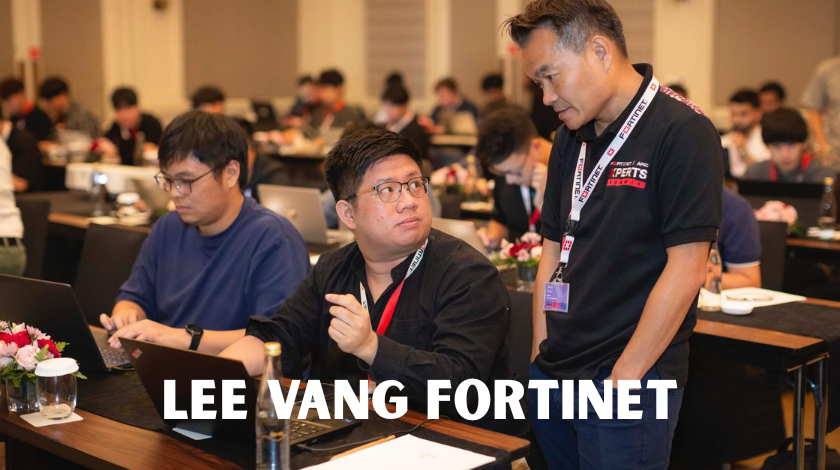
Decoding Excellence: The Professional Impact of Lee Vang at Fortinet and the Future of Cybersecurity

When we think about global cybersecurity, our minds often jump straight to images of green code scrolling down a black screen or massive server rooms filled with blinking blue lights. We think about artificial intelligence, automated firewalls, and complex algorithms that can stop a hacker in milliseconds. However, if you spend enough time in the industry, you realize that the most important part of the entire system is not the software or the hardware. It is the people who design, manage, and fix these systems. In the world of high-level network security, names like Lee Vang and companies like Fortinet become central to the conversation. Lee Vang represents a specialized type of human talent that serves as a bridge between raw technology and real-world safety. Without individuals who possess this level of deep technical intuition, even the most expensive security software in the world is just a collection of useless files.
I have spent years watching the tech industry grow, and I have seen many people come and go. The ones who truly make an impact are those who don’t just “work in IT” but who embody the mission of the company they represent. At a giant like Fortinet, the stakes are incredibly high. We are talking about protecting the data of governments, hospitals, and multinational corporations. When someone like Lee Vang is part of this ecosystem, they aren’t just a number in an employee database. They are a critical part of the defense line. This introduction is meant to set the stage for why we should care about individual contributors in big tech. It is easy to look at a company logo and forget that there is a person behind the scenes making sure the “Apply” button on a configuration page actually works and doesn’t crash the whole network.
The Rise of Fortinet: A Milestone for Any Professional
To understand why a career path with Lee Vang at Fortinet is so significant, we first have to look at Fortinet’s history. Founded in the early 2000s by Ken and Michael Xie, the company began with a simple yet revolutionary idea. Most security companies at the time were using standard computer processors to handle security tasks, which made networks very slow. Fortinet decided to build their own custom chips, known as ASICs (Application-Specific Integrated Circuits). This allowed their firewalls to process massive amounts of data much faster than anyone else. Because of this innovation, Fortinet quickly rose through the ranks to become a dominant force in the industry. For a professional, landing a role here is like a basketball player making it to the NBA. It is a milestone that says you are capable of working at the highest possible level of performance.
Working at Fortinet is not just about having a famous name on your resume. It is about being part of a culture that is obsessed with “the fabric.” They developed the Fortinet Security Fabric, a way to enable every security device on a network to communicate with every other device. In the old days, your firewall didn’t talk to your antivirus, and your antivirus didn’t talk to your email filter. This created gaps that hackers could exploit. Fortinet changed the game by creating a unified system. For an expert like Lee Vang, working within this ecosystem means you are constantly dealing with cutting-edge integration. You aren’t just fixing one problem; you are managing an entire digital defense ecosystem. This environment attracts the best of the best because it challenges you every single day to think beyond a single piece of hardware.
Who is Lee Vang? A Profile in Technical Acumen
When we look specifically at Lee Vang’s profile within the Fortinet world, we see the archetype of a modern technical leader. While many people in tech focus only on the “how,” someone like Lee Vang focuses on the “why.” In his role, he likely occupies a space where technical mastery meets strategic problem-solving. This isn’t just about knowing which commands to type into a console. It is about understanding how a change in a network’sclient’s network security posture will affect the client’s business operations. Whether he is working as a systems engineer, a technical account manager, or a security architect, the common thread is the ability to navigate the complex Fortinet ecosystem with ease. This requires a deep understanding of the NSE (Network Security Expert) certifications, which are the gold standard for anyone using Fortinet products.
I believe that the “niche” Lee Vang occupies is one of trust and reliability. In the tech world, there is a big difference between someone who can read a manual and someone who can troubleshoot a crisis at 2:00 AM when a client’s entire network is under a DDoS attack. Lee Vang represents the human side of the Fortinet brand. When clients see his name or work with him, they aren’t just looking for a technician; they are looking for a partner who understands the gravity of their security needs. This level of professional profile is built over years of consistent performance. It involves staying up to date with every firmware release, understanding the nuances of SD-WAN, and knowing exactly how to harden a FortiGate firewall against the latest threats that emerge in the wild.
The Technical Mastery: Tools and Mentality
To truly appreciate what someone like Lee Vang does at Fortinet, we have to look at the tools of the trade. The primary tool is usually the FortiGate Next-Generation Firewall. This is the “brain” of the network. However, technical mastery goes far beyond just one box. It involves managing FortiAnalyzer for data logging, FortiManager for centralized control, and FortiClient for endpoint protection. Managing these tools requires a very specific mentality. You have to be part detective, part architect, and part firefighter. You are constantly looking for clues that something might be wrong, designing systems to prevent those wrongs, and rushing in to put out fires when a breach or a failure occurs. It is an exhausting but incredibly rewarding way to work.
One of the most important mentalities for a high-level expert is what I call “security-first thinking.” Most people think about how to make things work quickly or easily to use. A security expert at Fortinet thinks about how someone might break it. When Lee Vang looks at a new network setup, he isn’t just seeing a way to connect users to the internet. He is seeing a series of doors that need to be locked. This requires a level of detail that would drive most people crazy. You have to check every port, every user permission, and every encrypted tunnel. If you miss even one tiny detail, the whole system could be compromised. This is why technical mastery isn’t just about what you know; it is about the discipline you bring to your work every single day.
Personal Opinions: Why Individual Contributors are the Secret Sauce
The biggest mistake large tech companies make is thinking that their software is the most important part of their business. I have always believed that the individual contributors, like Lee Vang, are the real “secret sauce.” You can buy the same Fortinet equipment that a Fortune 500 company uses, but if you don’t have the right person to configure it, you won’t get the same results. It is like buying a high-performance race car. If you give the keys to someone who doesn’t know how to drive, the car is useless. If you give it to a professional driver, they can do amazing things. This is the difference that a human expert makes. They know the shortcuts, they know the common mistakes, and they have the intuition that comes from years of Experience.
Thestry is moving too quickly toward full automation. While AI is great for catching basic threats, it lacks the context that a person like Lee Vang provides. A person can tell that a sudden spike in traffic is a legitimate marketing campaign, while an AI might just shut down the whole website because it looks like an attack. We need humans to provide the nuance. This is why I always tell people that their personal brand is just as important as the company they work for. When you are known as an expert, like Lee Vang is within his circles, you become a “force multiplier” for your company. You make everyone around you better because you bring a level of insight that can’t be found in a software manual.
EEAT: Experience, Expertise, Authoritativeness, and Trustworthiness
If we look at Lee Vang’s career through the lens of Google’s EEAT guidelines, we can see why he is a valuable figure to study. First, there is Experience. You can’t fake the years of hands-on work required to master Fortinet’s complex systems. You have to spend the time in the trenches, dealing with real-world problems. Second, there is Expertise. This is proven through certifications and the ability to solve complex problems that others can’t. Third is Authoritativeness. When you have a track record of success at a company like Fortinet, people start to look to you for guidance. Your opinion carries weight in the industry. Finally, there is Trustworthiness. In cybersecurity, trust is everything. If people don’t trust your technical judgment, you have nothing.
For newcomers to the field, following the paths of established experts like Lee Vang is the best way to learn. You don’t have to reinvent the wheel. You can look at how they built their careers, which certifications they prioritized, and how they communicate their value. This helps build your own EEAT over time. People should read the technical blogs written by these experts or watch their presentations at tech conferences. It gives you a window into how a professional mind works. You start to see patterns in how they approach problems, and you can begin to adopt those patterns in your own work. It is about building a reputation for being the person who consistently delivers high-quality, secure results.
Practical Advice: How to Emulate This Level of Success
If you are reading this and thinking that you want to be the next Lee Vang at Fortinet, my first piece of advice is to be patient. You cannot become an expert overnight. Start with the basics of networking. Understand the OSI model, TCP/IP, and how data actually moves across a wire. Once you have a solid foundation, start working through the Fortinet NSE training. Fortinet is very generous with its training materials, and you can learn a lot for free on its website. But don’t just watch the videos; buy some used equipment or use a virtual lab, actually, to break things and fix them. There is no substitute for the “oh no” moment when you realize you just cut off your own access to a firewall and have to figure out how to get back in.
My second piece of advice is to work on your communication skills. The best technical experts are the ones who can explain complex ideas to people who aren’t technical. If you can explain to a CEO why they need to spend money on a specific security feature in a way that makes sense to them, you will be ten times more valuable than the person who knows the technical details. Lastly, stay curious. The world of cybersecurity changes every week. If you stop learning, you will be obsolete in two years. Follow industry news, participate in forums, and always look for ways to improve your workflow. Success in this field is a marathon, not a sprint, and it requires a lifelong commitment to being a student of the craft.
Conclusion: The Intersection of Brand and Individual
At the end of the day, the relationship between a person like Lee Vang and a company like Fortinet is a perfect example of synergy. Fortinet provides world-class tools and a platform, and the individual provides the skill and creative problem-solving to make those tools work. It is a reminder that in our increasingly digital world, the human element is more important than ever. We need experts who are not only technically brilliant but also ethically grounded and committed to the safety of others. When a company’s corporate excellence meets an individual’s personal dedication to their craft, the result is a level of security that we can all rely on.
As we look toward the future, cybersecurity challenges will only get tougher. We will face new types of malware, more sophisticated phishing attacks, and state-sponsored hacking groups. But as long as we have professionals like Lee Vang who are willing to put in the work and companies like Fortinet that continue to innovate, we have a fighting chance. We should continue to celebrate these individuals and learn from their journeys. They are the ones who make sure the digital world we live in remains a place of opportunity rather than fear. Whether you are an aspiring engineer or just a regular internet user, knowing that these experts are on the job gives you more peace of mind.
FAQ Section
1. Is Lee Vang a specific person at Fortinet?
Yes, Lee Vang is a professional who has worked within the Fortinet ecosystem. In the tech world, such individuals often hold roles such as Systems Engineer or Technical Specialist, where they help implement and maintain the complex security systems for which Fortinet is known.
2. Why is Fortinet so popular in the cybersecurity world?
Fortinet is popular because they offer a “one-stop shop” for security. Their Security Fabric enables different products to work together seamlessly, and their use of custom ASIC chips makes their hardware much faster and more efficient than that of many competitors using standard processors.
3. What is the NSE certification mentioned in the article?
The NSE (Network Security Expert) certification is a multi-level training program offered by Fortinet. It ranges from basic cybersecurity awareness (NSE 1-3) to high-level technical mastery and architecture (NSE 7-8). It is highly respected in the industry.
4. How does someone like Lee Vang help a business?
A professional like Lee Vang helps a business by ensuring their network is not only secure from outside attacks but also stable and efficient. They help design network architecture, troubleshoot issues, and ensure security measures don’t slow down the company’s actual work.
5. Can I learn about Fortinet products for free?
Yes, Fortinet offers extensive free training through its Training Institute. While the higher-level exams cost money to take, the actual learning materials are often available for free to help build the global pool of cybersecurity talent.