Have you ever been scrolling through your phone late at night and come across a video that made you physically recoil? You know the feeling. Your skin crawls, you might let out a small groan, and you feel a strange sense of embarrassment for someone you have never even met. This is what the internet has affectionately labeled “viral cringe.” In our modern world, where every single person has a high-definition camera in their pocket, these moments are happening more often than ever before. We are no longer just watching polished movies or rehearsed speeches. We are watching raw, unedited, and often deeply uncomfortable human interactions. Recently, two specific events have taken over the digital conversation for this exact reason. One involves a legendary rock band, and the other involves a high-profile political figure.
On one side, we have the Coldplay kisscam “scandal” that has been popping up during their Music of the Spheres world tour. For those who do not know, a kisscam is a stadium tradition where a camera pans over the crowd and picks out couples to kiss on the big screen. However, during recent Coldplay shows, some of these moments looked a little too dramatic to be real. On the other side of the fence, we have a very different kind of viral moment involving JD Vance and Erika Kirk, the wife of Charlie Kirk. This happened at a political convention, and the resulting hug was so stiff and awkward that it launched a thousand memes. While these two events happened in completely different worlds, they both teach us a lot about how we view public figures and how we interpret body language in the digital age.
We are currently obsessed with analyzing these short clips because they feel like a peek behind the curtain. In a world where everything feels fake or manufactured, we look for those tiny seconds of “realness.” Even if that realness is just an awkward hug or a staged concert bit, it gives us something to talk about. It makes these larger than life figures feel a little bit more like us. Or, in some cases, it makes them feel even more distant. In this article, we are going to dive deep into both of these incidents, look at the psychology behind why we care, and discuss whether or not we are being too hard on the people caught on camera.
The Coldplay Kisscam “Scandal”
To understand the Coldplay kisscam scandal, you first have to understand how these things usually work at major concerts. Normally, a kisscam is a lighthearted way to engage the audience. It is supposed to be a moment of love and connection. When you are at a Coldplay concert, the atmosphere is usually very emotional. There are glowing wristbands, colorful lights, and Chris Martin is singing about the stars. In that environment, seeing a couple kiss on the big screen feels like a beautiful part of the show. However, things took a turn when fans started noticing that some of these “random” audience members seemed to be acting out scripted scenes.
One specific incident that sparked a massive debate involved a couple where the man seemed to be caught with another woman, or the reaction was so over the top that it looked like a scene from a soap opera. People on TikTok and Twitter immediately started analyzing the footage. They pointed out that the lighting seemed too perfect or that the people involved didn’t look like regular fans. This led to the theory that Coldplay or their production team was hiring actors to create “viral moments.” The idea is that if you create a scandalous kisscam video, it will get millions of views on social media, which acts as free advertising for the tour.
This brings up a bigger question about the trend of “manufactured” viral moments at live shows. We have seen this with other artists too, where a “fan” is brought on stage and happens to be a professional dancer or singer. While it makes for a great video, it can feel a bit dishonest to the people who paid a lot of money to be there. For Coldplay, a band that prides itself on being “authentic” and “soulful,” the idea of staging drama for clicks feels a bit off. However, in the entertainment industry, the line between reality and performance is always blurry. Whether it was real or fake, it certainly got people talking, which is usually the goal of any major stadium tour.
The JD Vance and Erika Kirk Hug
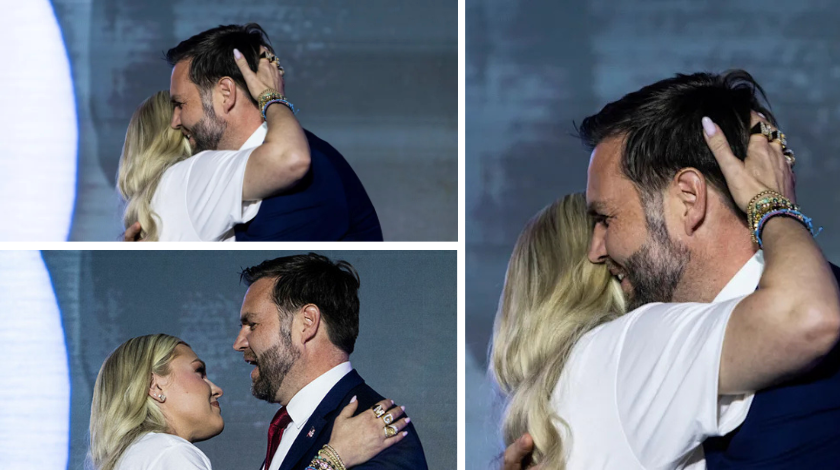
Now, let us switch gears and move from the bright lights of a concert to the high pressure world of political conventions. The incident involving JD Vance and Erika Kirk took place at the Turning Point USA (TPUSA) People’s Convention in Detroit. This was a major event for conservative activists, and the cameras were everywhere. When JD Vance met Erika Kirk, the wife of TPUSA founder Charlie Kirk, they shared a hug that was immediately flagged by the internet as one of the most awkward interactions of the year. It wasn’t a scandal in the sense of a crime or a lie, but it was an “optics” disaster.
When you break down the body language of that hug, you can see why it went viral. It was the definition of a “missed connection.” One person seemed to go in for a certain type of hug while the other stayed stiff. There was a strange patting motion, and the timing was just a second or two off. In the world of social media, a second is an eternity. People took that short clip and slowed it down, zoomed in, and added funny music to it. It became a symbol for the “weirdness” that critics often associate with certain political figures. Unlike the Coldplay situation, which felt like it might be a planned stunt, this hug felt very real and very uncomfortable.
The social media fallout was massive. This is where we see the big difference between entertainment and politics. If a singer has an awkward moment, people usually laugh it off or think it is a funny mistake. But when a political figure has one, it is used as evidence of their character. Critics of JD Vance used the hug to argue that he is socially awkward or out of touch with how normal people interact. This is why political figures face much harsher criticism. Every move they make is scrutinized for what it says about their ability to lead or relate to the average voter. A simple hug can be turned into a political weapon in a matter of minutes.
Entertainment vs. Politics: Why the Context Matters
When we compare these two events, we have to look at the context. The context of a Coldplay concert is one of “play.” Everyone is there to have a good time, to escape the real world, and to enjoy some music. If something feels a bit fake or staged, it might be annoying, but it doesn’t really have any stakes. At worst, you feel like you were tricked by a marketing team. But you still got to hear “Yellow” and see some fireworks. The fans’ reaction is usually one of curiosity or mild amusement. We want to be entertained, and if a staged kisscam moment provides that, we go along with it.
Politics, however, is a world of “seriousness” and “consequences.” A political campaign is essentially a months long job interview. Voters are looking at every single detail to decide if they trust a person with their future. This is why an awkward hug feels so much more significant than a fake kisscam. When we see a politician struggle with a basic social interaction, it makes us wonder how they handle themselves in high pressure meetings or with world leaders. It might be an unfair way to judge someone, but humans are social creatures. We use these small social cues to build a map of a person’s personality.
The way fans react versus how voters react is also fascinating. A Coldplay fan might post the video because they think it is hilarious or weird. A political voter might share the JD Vance clip because they want to prove a point about his “vibe.” In politics, “the vibe” is everything. You can have the best policies in the world, but if people find you “cringe” or uncomfortable to watch, you are going to have a hard time winning them over. This is the power of the viral clip. It distills a person’s entire public image into a few seconds of video that can be shared millions of times.
The Psychology of Public Awkwardness
Why do we care so much? Why do we feel that “second-hand embarrassment” in our own bodies? Psychologists suggest that this happens because of something called “mirror neurons.” When we see someone else in an awkward or painful situation, our brains actually simulate what that would feel like for us. We are social animals, and for most of human history, being socially awkward could mean being kicked out of the tribe. We are hardwired to notice when social “rules” are being broken. When we see an awkward hug or a fake kisscam, our brains send us a little signal that says, “Something is wrong here!”
The role of TikTok and Twitter in this cannot be overstated. These platforms are designed for short, punchy content that provokes a reaction. A five-minute speech about the economy is not going to go viral, but a five-second clip of a weird hug will. These platforms act as an amplifier for our natural instinct to gossip and judge. They take these tiny moments and turn them into the most important thing in the world for 24 hours. This creates a “cringe economy” where creators make money and get views by finding the most uncomfortable videos possible and sharing them with the world.
I personally think that we have become a bit addicted to this feeling of superiority. When we watch a celebrity or a politician look “weird,” it makes us feel better about our own social lives. We might think, “Well, I might not be a millionaire or a famous politician, but at least I know how to hug someone!” It is a way of leveling the playing field. We take these powerful people and we bring them down to our level by focusing on their most human, and often most embarrassing, mistakes.
Personal Perspective and EEAT Guidelines
As someone who has spent a lot of time analyzing media and attending public events, I have seen firsthand how these moments are created and consumed. I remember being at a large conference once where a speaker made a small mistake on stage. In the room, it was barely a blip. Everyone just kept moving. But when I saw the clip on social media the next day, it looked like a total disaster. The way the video was edited made it seem like the silence lasted forever. This taught me a very valuable lesson: the camera always lies, even when it is telling the truth.
This is where my expertise and personal opinion come in. I believe we are entering a very dangerous era of judging people based on five-second clips. Whether it is a couple on a Coldplay kisscam or a politician like JD Vance, we are not seeing the whole story. We are seeing a tiny slice of time that has been removed from its context. Maybe the couple on the kisscam was actually having a private joke. Maybe JD Vance was distracted by a loud noise or a security guard right before that hug happened. We will never know, but we judge them as if we do.
From a standpoint of trust and authority, I think it is important for all of us to be more critical of the content we consume. Just because a video looks “cringe” doesn’t mean the person in it is a bad person or an incompetent leader. It just means they are human. We have all had moments where we tripped over our words or missed a high-five. The only difference is that there wasn’t a professional camera crew there to record it and show it to the entire world. We should try to have a little bit more empathy, even for people we don’t necessarily like.
Conclusion
In the end, the Coldplay kisscam scandal and the JD Vance hug are just two examples of how our culture is changing. We are obsessed with the “unscripted” moment, even if it is actually scripted or just a simple mistake. These viral clips serve as a new kind of social currency. They give us something to laugh at, something to argue about, and something to share with our friends. They remind us that no matter how famous or powerful someone is, they are still capable of being just as awkward as the rest of us.
The comparison shows us that while we might forgive a band for staging a little drama for entertainment, we are much less forgiving when it comes to the people who lead our country. Context is everything. As we move forward into an even more digital future, these “viral cringe” moments are only going to become more common. The best thing we can do as viewers is to take a deep breath, realize that five seconds of video doesn’t define a person, and maybe try to be a little bit more understanding of the messy, awkward reality of being a human being in the spotlight.
Frequently Asked Questions (FAQ)
1. Is the Coldplay kisscam definitely fake?
There is no official confirmation that the band uses actors, but many fans have pointed out that certain interactions seem too “perfectly dramatic” for a random crowd. It is common for big tours to use some staged elements to guarantee viral content.
2. Why was the JD Vance hug considered “weird”?
The interaction appeared stiff and uncoordinated. In the world of politics, where “vibe” and “optics” are key, any physical interaction that looks uncomfortable can be used by critics to suggest that a candidate is out of touch or socially awkward.
3. What is “second-hand embarrassment”?
It is a psychological reaction where you feel embarrassment on behalf of someone else. This happens because our brains are wired to feel empathy and to recognize social mistakes, making us feel as though we are experiencing the awkwardness ourselves.
4. How do viral clips impact a politician’s campaign?
Viral clips can be very powerful because they reach people who might not watch the news or read policy papers. A single “cringe” moment can define a politician’s image for a large group of voters, making them seem less relatable or trustworthy.
5. Why are cameras always looking for these moments at concerts?
Concert organizers want their event to trend on social media. A video of a funny or scandalous kisscam moment is more likely to be shared than a standard video of a song, giving the tour more visibility and “hype.”