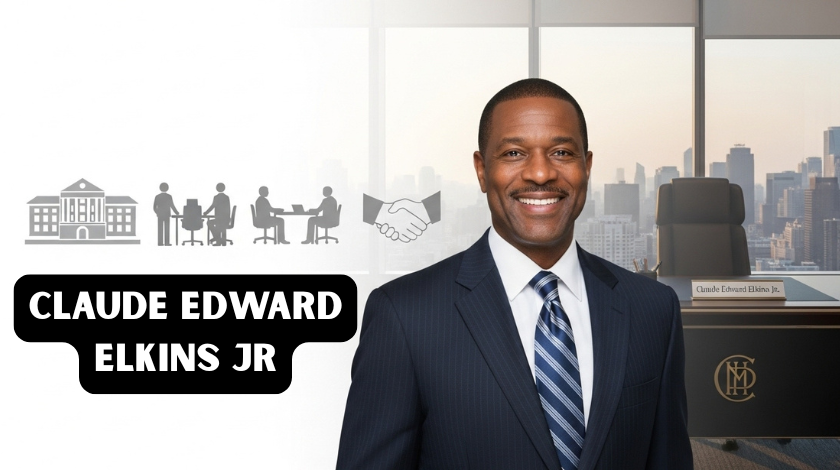
Claude Edward Elkins Jr: The Inspiring Journey From Railroad Brakeman to Executive Vice President

There is something genuinely refreshing about business leaders who did not start their careers in corner offices or inherit positions of power. In an era where corporate executives often seem disconnected from the day-to-day realities of their industries, Claude Edward Elkins Jr. stands out as a remarkable exception. His story is not one of overnight success or privileged beginnings. Instead, it is a testament to patience, persistence, and the kind of authentic leadership forged over decades of hands-on experience.
When you look at the current leadership landscape of major American corporations, you will find plenty of executives with impressive educational credentials and polished resumes. What you will not find as often is someone who literally started at the bottom of their industry and worked their way to the very top. That is exactly what makes Ed Elkins, as he is commonly known, such a compelling figure in the railroad business today. As the Executive Vice President and Chief Commercial Officer at Norfolk Southern Corporation, he now oversees billions of dollars in revenue and leads thousands of employees across multiple business divisions. Yet he began his career wearing work boots and handling freight in rail yards.
This journey from brakeman to boardroom is not just a feel-good story for corporate newsletters. It represents something increasingly rare in modern business: a leader who truly understands every aspect of his industry because he has personally experienced it. In my years of studying leadership and organizational development, I have noticed that the most effective executives are often those who have spent time in the trenches. They make better decisions because they understand the practical implications of their choices. Elkins embodies this principle perfectly, and his career trajectory offers valuable lessons for anyone aspiring to leadership roles in transportation, logistics, or other industries that value operational expertise.
Early Life and the Military Foundation
Claude Edward Elkins Jr. was born and raised in Southwest Virginia, a region with deep railroad history and a vital economic force. Growing up in this environment undoubtedly shaped his understanding of how freight transportation connects communities and powers economic growth. The Appalachian region has always been dependent on reliable transportation networks to move coal, timber, and manufactured goods to markets across the country. For a young person growing up there, the railroad was not just an abstract concept or a stock ticker symbol. It was a tangible presence that employed neighbors, supported families, and kept the local economy moving.
Before he ever considered a career in the railroad industry, however, Elkins made a decision that would profoundly shape his character and work ethic. He joined the United States Marine Corps, serving his country with the same dedication that would later define his professional life. Military service has a way of instilling discipline, resilience, and leadership qualities that translate remarkably well to civilian careers. The Marines, in particular, are known for developing individuals who can perform under pressure, adapt to changing circumstances, and lead teams toward common objectives.
I have always believed that military veterans bring unique perspectives to corporate leadership. They understand the chain of command without being rigid about it. They know how to make decisions with incomplete information. Perhaps most importantly, they appreciate the value of every team member, from the newest recruit to the most senior officer. These qualities are evident in how Elkins has approached his career at Norfolk Southern. The transition from military service to civilian employment is rarely seamless, but the foundational skills Elkins developed during his time in the Marines clearly served him well as he entered the workforce in 1988.
Starting at the Bottom: The Railroad Entry
Most people who aspire to executive positions hope to enter their chosen industry at a management level, or at least in a role that offers a clear path to advancement. Ed Elkins took a different approach entirely. When Norfolk Southern hired him in 1988, it was not for a management trainee position or a corporate strategy role. They hired him as a Road Brakeman, one of the most physically demanding and dangerous jobs in the railroad industry.
For those unfamiliar with railroad operations, a brakeman is responsible for coupling and uncoupling rail cars, setting brakes, and performing various safety checks on moving equipment. It is outdoor work in all weather conditions, often involving heavy lifting, climbing on equipment, and working around massive moving machinery. The hours are irregular, the conditions can be harsh, and the margin for error is slim. It is honest, hard work that requires attention to detail and a strong commitment to safety protocols.
What strikes me as particularly significant about Elkins’s career is that he did not view this entry-level position as beneath him or as something to endure briefly before moving on to bigger things. Instead, he embraced the opportunity to learn the railroad from the ground up. He progressed through the operational ranks naturally, serving as a Conductor and then as a Locomotive Engineer. Each of these roles added layers of practical knowledge that would prove invaluable in his later executive responsibilities.
As a Locomotive Engineer, Elkins was literally in the driver’s seat, responsible for safely operating trains over Norfolk Southern’s network. This experience gave him intimate knowledge of the physical plant, the challenges of different terrains and weather conditions, and the critical importance of schedule reliability. He also served as a Relief Yardmaster, gaining supervisory experience in rail yard operations and learning how to coordinate the complex movements of hundreds of rail cars.
I often tell young professionals that there is no substitute for operational experience in any industry. You can study supply chain management in textbooks, but until you have actually watched how freight moves through a classification yard, you do not fully appreciate the complexity involved. Elkins spent years accumulating this kind of practical wisdom, and it shows in how he speaks about the business today. He can discuss intermodal logistics with the authority of someone who has personally moved freight, not just analyzed spreadsheets.
The Marketing Transition: Two Decades of Building Relationships
After establishing himself as a capable operations professional, Elkins made a career move that would set the stage for his eventual rise to executive leadership. He transitioned into Intermodal Marketing, where he would spend the next two decades developing expertise in the commercial side of the railroad business. This move from operations to marketing is more significant than it might initially appear, and it speaks to Elkins’s versatility and strategic thinking.
Intermodal transportation, which involves moving freight across multiple modes without handling the cargo at mode changes, is one of the most complex and competitive segments of the logistics industry. Success in intermodal marketing requires not just knowledge of railroad operations, but also an understanding of trucking, ocean shipping, customer supply chains, and the economic factors that drive mode selection decisions. Elkins had to learn how to sell Norfolk Southern’s services to sophisticated shippers with multiple transportation options.
What I find particularly impressive about this phase of his career is how Elkins apparently leveraged his operational background to build credibility with customers. When a salesperson can speak knowledgeably about transit times, terminal operations, and service reliability from personal experience, it creates a level of trust that is difficult to fake. Shippers deal with enough salespeople who promise the moon without understanding operational constraints. Elkins could speak with authority because he had lived the operational reality.
During these twenty years in intermodal marketing, Elkins was building something else that would prove equally valuable: relationships. The railroad industry is a relationship business at its core. Major shippers make long-term commitments to transportation providers based on trust, consistency, and the confidence that their partners will deliver on promises. The connections Elkins forged during this period would serve him well as he moved into broader leadership roles with responsibility for larger customer portfolios and more diverse business segments.
The Executive Ascension: From Vice President to C-Suite
Elkins’s progression into senior leadership followed a logical trajectory that reflected both his expanding responsibilities and his demonstrated capabilities. In 2016, he was named Group Vice President of Chemicals Marketing, taking on responsibility for one of Norfolk Southern’s most important and specialized business segments. The chemicals industry has unique transportation requirements, including hazardous materials handling, strict safety regulations, and specialized equipment needs. Leading this group effectively required deep industry knowledge and strong customer relationships.
His success in this role led to a promotion in 2018 to Vice President of Industrial Products, a broader portfolio that included multiple commodity groups and customer segments. This position gave Elkins experience managing diverse business lines with different market dynamics, competitive pressures, and growth opportunities. It was an effective preparation for the ultimate responsibility he would assume in 2021.
When Norfolk Southern appointed Elkins as Executive Vice President and Chief Commercial Officer in 2021, it represented the culmination of a thirty-three-year journey that had started in a brakeman’s uniform. The appointment was significant not just for Elkins personally, but for what it signaled about the company’s leadership philosophy. Norfolk Southern chose to elevate someone who had spent his entire career with the company, understood the business from the ground up, and had proven his ability to lead through multiple economic cycles and industry changes.
In his current role, Elkins leads the company’s Intermodal, Automotive, and Industrial Products business divisions. These three areas represent the core of Norfolk Southern’s commercial operations and generate the majority of the company’s revenue. He also manages the Real Estate, Industrial Development, Short Line Marketing, Field Sales, and Customer Logistics business groups. This is a massive portfolio that requires balancing immediate operational concerns with long-term strategic planning, managing relationships with some of the largest shippers in North America, and supporting the development of new business opportunities.
What I appreciate about this leadership structure is how it reflects the integrated nature of modern railroading. Elkins is not just responsible for selling transportation services; he also oversees industrial development, working with communities and economic development authorities to attract new businesses to Norfolk Southern’s service area. He manages short-line marketing, which requires coordinating with smaller railroads that feed traffic into Norfolk Southern’s network. This holistic approach to commercial leadership recognizes that railroad success depends on ecosystem development, not just individual transactions.
Leadership Philosophy: Collaboration and Empowerment
Having studied numerous executives across various industries, I have developed a theory: the most effective leaders are those who do not need to remind everyone that they are in charge constantly. They lead through influence, expertise, and the respect they have earned rather than through positional authority alone. Based on available information about his management approach, Elkins appears to embody this leadership style.
Those who have worked with him describe a philosophy rooted in collaboration and empowerment. This makes perfect sense given his background. Someone who has worked as a brakeman, conductor, and engineer understands that frontline employees often have the best insights into operational challenges and opportunities. They know where the inefficiencies are. They understand what customers are actually saying. Effective leaders tap into this knowledge rather than relying solely on reports filtered through multiple management layers.
I believe this collaborative approach is particularly valuable in the railroad industry today, which faces numerous challenges, including workforce recruitment, infrastructure investment needs, and the ongoing imperative to improve safety performance. These challenges cannot be solved by executives working in isolation. They require input from operations personnel, mechanical employees, transportation planners, and customer service representatives. Leaders who have walked in those shoes, as Elkins has, are naturally more inclined to seek out and value that input.
Another aspect of Elkins’s leadership that deserves attention is his apparent commitment to employee development. Having benefited from opportunities to grow and advance within Norfolk Southern, he seems to recognize the importance of creating similar pathways for the next generation of railroaders. This is crucial for an industry that struggles with aging workforces and the need to attract young talent to replace retiring employees. When frontline workers see examples of people who started where they are and rose to senior leadership, it provides a powerful motivation to invest in their own careers and commit to the company long-term.
Beyond the Railroad: Community Engagement and Board Service
Truly successful business leaders understand that their responsibilities extend beyond their company’s bottom line. They recognize that corporations operate within communities and have obligations to contribute to social well-being. Elkins has demonstrated this understanding through his extensive involvement in civic and charitable organizations, particularly in the Georgia region where Norfolk Southern maintains significant operations.
Currently serving as Vice Chair of the Georgia Chamber of Commerce, Elkins helps shape the business climate of one of the most economically dynamic states in the Southeast. The Georgia Chamber represents businesses of all sizes across the state and advocates for policies that support economic growth, workforce development, and infrastructure investment. For a railroad executive, involvement with the state chamber is strategically important given the critical connection between transportation infrastructure and economic development. It also provides opportunities to influence policy discussions that directly impact the railroad industry.
Perhaps even more personally meaningful is his service on the East Lake Foundation’s board of directors. This organization is dedicated to community revitalization and has gained national recognition for its holistic approach to transforming distressed neighborhoods. The East Lake model, which originated in Atlanta, focuses on mixed-income housing, quality education, and community wellness as interconnected elements of neighborhood renewal. For someone who grew up in rural Southwest Virginia, where community bonds run deep and economic challenges are familiar, this kind of hands-on community development work likely resonates on a personal level.
Elkins also serves on the boards of the National Association of Manufacturers and TTX Company. The National Association of Manufacturers is the premier advocacy organization for American manufacturing, representing companies across all industrial sectors. Given that Norfolk Southern’s business depends heavily on manufacturing output, from automotive production to chemicals processing to consumer goods distribution, this board role allows Elkins to contribute to policy discussions that affect his customers as well as his own company.
TTX Company is particularly interesting because it is a railcar pooling company owned by multiple railroads, including Norfolk Southern. Serving on this board gives Elkins insight into railcar fleet management and the shared infrastructure that supports the entire industry. It is a role that requires balancing the interests of multiple railroad owners while optimizing equipment utilization across the North American rail network.
Additionally, Elkins participates in the Georgia State University Marketing RoundTable and is a member of The Conference Board’s Council for Chief Marketing Officers. These affiliations suggest a continuing commitment to professional development and to staying connected to broader marketing and business trends beyond the railroad industry. Even at the executive level, he appears to value learning from peers in other industries and bringing fresh perspectives back to Norfolk Southern.
Education and the Value of Continuous Learning
One might assume that someone who started as a brakeman and worked his way to the C-suite did so despite lacking formal educational credentials. In fact, Elkins’s educational background reveals a commitment to continuous learning that paralleled his professional advancement. He earned a bachelor’s degree in English from the University of Virginia’s College at Wise, a regional campus of the University of Virginia system located in the coalfields of Southwest Virginia.
The choice of English as a major is interesting and perhaps revealing. At the same time, business administration or economics might seem like more obvious choices for someone pursuing a corporate career. Still, the study of English develops communication skills, critical thinking, and the ability to analyze complex texts and arguments. These capabilities serve leaders well in any industry, particularly in railroading, where safety depends on clear communication and regulatory compliance requires careful interpretation of complex rules.
Later in his career, Elkins pursued graduate education at Old Dominion University in Norfolk, Virginia, earning an MBA with a concentration in Port and Maritime Economics. This was a strategically smart choice given Norfolk Southern’s significant presence at the Port of Virginia and the growing importance of international intermodal traffic to the railroad’s business. Understanding port operations, maritime economics, and the interface between ocean shipping and rail transportation is directly relevant to his responsibilities as Chief Commercial Officer.
What I take from this educational progression is that Elkins has never stopped learning. He did not rest on his operational experience or assume that hands-on knowledge was sufficient for leadership. Instead, he continued to build his intellectual toolkit, adding business frameworks and economic analysis capabilities to his practical expertise. This combination of street smarts and book learning, of rail yard experience and academic credentials, makes him a particularly well-rounded executive.
Industry Impact and Lasting Legacy
It is still relatively early in Elkins’s tenure as Chief Commercial Officer to fully assess his lasting impact on Norfolk Southern and the railroad industry. However, certain observations can be made about his influence and the direction he appears to be setting.
Under his commercial leadership, Norfolk Southern has continued to emphasize customer service and operational reliability as competitive differentiators. The railroad industry has become increasingly competitive with trucking for freight business, particularly in the intermodal segment, where railroads and motor carriers vie for the same shipments. Success in this environment requires not just efficient operations but also sophisticated marketing, responsive customer service, and the ability to tailor solutions to individual shipper needs. Elkins’s background in both operations and marketing positions him well to lead this charge.
Perhaps more importantly, his career serves as a powerful example of what is possible in the railroad industry for those willing to work hard, learn continuously, and demonstrate leadership at every level. In an era when young people often job-hop between industries and companies, Elkins’s 30+ years of commitment to Norfolk Southern demonstrates the value of institutional knowledge and deep industry expertise. He knows the company culture, the history of decisions made and lessons learned, and the evolution of customer relationships over decades. This kind of knowledge cannot be acquired quickly or transferred easily.
I believe his legacy will ultimately be measured not just in financial metrics or market share gains, but in the leaders he develops and the culture he helps maintain at Norfolk Southern. If he can inspire a new generation of railroaders to view operational roles as stepping stones rather than dead ends, and to invest in long-term careers with the company, that will represent a contribution that outlasts any single quarterly earnings report.
Conclusion
The story of Claude Edward Elkins Jr. reminds us that authentic leadership is not about where you start but about how you grow, what you learn, and how you treat people along the way. From his early days as a Marine to his current role as a senior executive at one of America’s largest railroads, he has demonstrated that dedication, continuous learning, and respect for operational expertise can carry a person from the front lines to the executive suite.
In a business world that often seems obsessed with rapid promotion and quick wins, there is something deeply reassuring about a career built over three decades of steady advancement through multiple functional areas. It suggests that the old virtues of hard work, patience, and genuine expertise still matter, even in an age of disruption and transformation. For anyone considering a career in transportation, logistics, or any industry that values operational excellence, Ed Elkins’s journey offers both inspiration and a practical roadmap for success.
Frequently Asked Questions
Who is Claude Edward Elkins Jr.? Claude Edward Elkins Jr., commonly known as Ed Elkins, is the Executive Vice President and Chief Commercial Officer at Norfolk Southern Corporation. He has worked for Norfolk Southern since 1988, starting as a Road Brakeman and rising through operational and marketing roles to his current executive position.
What is Ed Elkins’s background and education? Elkins grew up in Southwest Virginia and served in the United States Marine Corps before beginning his railroad career. He earned a bachelor’s degree in English from the University of Virginia’s College at Wise. He later completed an MBA at Old Dominion University with a concentration in Port and Maritime Economics.
How did Ed Elkins rise from brakeman to executive at Norfolk Southern? Elkins spent his first years in railroad operations, working as a brakeman, conductor, locomotive engineer, and relief yardmaster. He then transitioned to Intermodal Marketing, where he spent two decades before moving into senior leadership roles as Group Vice President of Chemicals Marketing in 2016, Vice President of Industrial Products in 2018, and, finally, Executive Vice President and Chief Commercial Officer in 2021.
What does the Chief Commercial Officer at Norfolk Southern do? As Chief Commercial Officer, Elkins leads the company’s Intermodal, Automotive, and Industrial Products business divisions. He also oversees Real Estate, Industrial Development, Short Line Marketing, Field Sales, and Customer Logistics business groups, essentially managing all revenue-generating commercial activities.
Is Claude Edward Elkins Jr. involved in community organizations? Yes, Elkins serves as Vice Chair of the Georgia Chamber of Commerce and sits on the boards of the East Lake Foundation, National Association of Manufacturers, and TTX Company. He also participates in Georgia State University’s Marketing RoundTable and The Conference Board’s Council for Chief Marketing Officers.