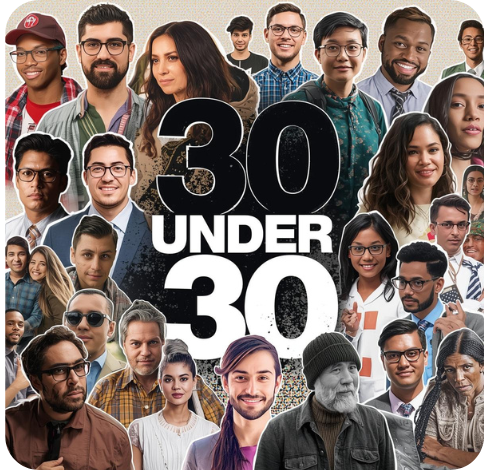
I remember sitting in my college dorm room at 22, scrolling through the latest Forbes 30 Under 30 list, feeling that familiar mix of inspiration and inadequacy. There they were, people my age or younger, building billion-dollar companies, changing industries, and somehow looking polished in professional photos while I was still figuring out how to cook pasta without burning it. If you have ever felt that way, you are not alone. But here is what I have learned after years of studying these lists, interviewing honorees, and building my own career: the 30 Under 30 story is far more complex, messy, and ultimately more encouraging than those glossy profiles suggest.
The 2026 Forbes 30 Under 30 class just dropped, and the numbers are staggering. We are talking about 600 young people across 20 categories who have collectively raised $3.8 billion in funding and reached over 200 million fans online. That is not a typo—billion with a B. The youngest honoree this year is just 15, while the average age is 27. But beyond these headline figures lies a deeper narrative about what it actually takes to build something meaningful before your thirtieth birthday, and why some of the most successful entrepreneurs in history did not even start until after 30.
What Exactly Is 30 Under 30, and Where Did It Come From?
Forbes launched the 30 Under 30 list in January 2012 under the direction of editor-in-chief Randall Lane. The concept was straightforward but revolutionary: identify 30 notable people under 30 years old in various industries who were already making significant impacts. What started as a single list has exploded into a global phenomenon. Today, the American list features 600 people across 20 sectors, while Asia and Europe each have 300 honorees across 10 categories, and Africa maintains a curated list of 30 trailblazers.
The nomination process is surprisingly accessible. Anyone can nominate themselves or someone else, as long as the nominee is under 30. But do not let that openness fool you. The competition is absolutely brutal. Each year, more than 10,000 people apply for the U.S. list alone, and the bar keeps rising. The 2026 class marks the 15th anniversary of the list, and over those 15 years, 46 Under 30 honorees have gone on to become Forbes billionaires. That is a conversion rate that venture capitalists would kill for.
The selection process involves Forbes reporters, independent experts, celebrity judges, and industry veterans. For 2026, judges included pop star Olivia Rodrigo, actress Yara Shahidi, billionaire entrepreneur Palmer Luckey, and others who evaluated candidates on impact, financials, and potential to scale. It is not just about having a good idea. It is about proving you can execute it.
The 2026 Class By The Numbers: What Is Actually Happening
Let us get specific about what this year’s class looks like because the trends tell us where entrepreneurship is heading. The 2026 honorees have raised over $3.8 billion in total funding, a significant increase from previous years. More telling is where that money is going. Artificial intelligence dominates this year’s list like never before. We are seeing young founders using machine learning to build robotic astronauts, create AI-powered coding tools, and develop platforms that let anyone become a master artist or genius programmer.
Take Jesse Zhang, the 25-year-old founder of Decagon. His company, valued at $1.5 billion, has raised $255 million to sell AI agents that handle customer service for major companies like Duolingo and ClassPass. Zhang’s insight captures something essential about this moment: “Whenever there is a big technology shift, it just opens the door for a lot of companies. But the number of great ideas is usually pretty small. Your job as a founder is to try to figure out what those are.”
The geographic distribution matters too. While Silicon Valley still produces plenty of honorees, we are seeing massive growth from emerging markets. The Forbes Africa 30 Under 30 list highlights founders solving uniquely African problems, from fintech solutions for unbanked populations to agricultural technology addressing food security. This globalization of innovation means you no longer need to be in San Francisco to build something world-changing.
Real Success Stories: Beyond the Headlines
Let me tell you about Luana Lopes Lara, whose story destroys the myth that successful entrepreneurs follow a linear path. Lara is now the world’s youngest female self-made billionaire at age something she probably prefers I do not specify. Still, she began her career as a professional ballerina in Rio de Janeiro. After nine months dancing in Austria, she gave up that grueling career and pivoted to engineering at MIT. While interning at Bridgewater Associates and Citadel Securities, she met Tarek Mansour, and together they founded Kalshi, a prediction market platform.
Kalshi just raised $1 billion at an $11 billion valuation, making Lara and Mansour billionaires. But here is what gets me: Lara spent summers working on trading floors while her peers were at the beach. She took a bet on a completely different industry because she saw an opportunity others missed. Her story is not about being a prodigy. It is about being willing to start over when you find something that genuinely excites you.
Then there is the story of Sohan Choudhury, who founded Flint, an AI education company. Choudhury started his company in May 2023 when the conversation around AI in schools was mostly negative, focused on cheating. Instead of avoiding the controversy, he asked a different question: how can we change this narrative? His company now partners with schools to build AI tools for teachers and students. When I read about founders like Choudhury, I am reminded that the best entrepreneurs do not chase trends. They solve problems that personally matter to them.
But let us also talk about the alums who prove this list has predictive power. Mark Zuckerberg made the list before Facebook became Meta. Evan Spiegel of Snapchat, LeBron James, Malala Yousafzai, and Spotify’s Daniel Ek all appeared on 30 Under 30 before becoming household names. The list has become a farm league for America’s next generation of business leaders. That reputation means inclusion can open doors to funding, partnerships, and media coverage that would otherwise take years to build.
How the Application Process Actually Works (And What Judges Really Want)
I have talked to several past honorees about the application process, and the consistent theme is that specificity wins. The judges are not looking for vague promises about changing the world. They want to see traction, metrics, and clear evidence that you are solving a real problem for real people.
The application typically opens in the spring and closes in the summer, with the list published in late November or early December. You can nominate yourself, which many people do not realize. The form asks for standard information: your age, company details, funding raised, revenue generated, and social impact metrics. But the essay questions are where you win or lose.
Sarah Hamer, who made the 2025 list with her supply chain software company RetailReady, told me something that stuck with me: “We had a lot of positive feedback, and then we asked people to pay, and all of the constructive feedback came out.” This is crucial. Judges want to see that you have validated your business with actual customers, not just friends and family. Financial validation beats vanity metrics every time.
The categories evolve in line with industry trends. For 2026, the 20 categories include AI, Art & Style, Education, Energy & Green Tech, Finance, Food & Drink, Games, Healthcare, Hollywood & Entertainment, Manufacturing & Industry, Marketing & Advertising, Media, Music, Retail & E-commerce, Science, Social Impact, Social Media, Sports, and Venture Capital. If your work spans multiple categories, pick the one where your impact is most measurable.
The Criticism Nobody Wants to Talk About
I would be doing you a disservice if I pretended the 30 Under 30 list is perfect. It is not. In the early years, critics rightfully called out the lack of diversity. The 2011 Media category list featured 29 white journalists out of 30, with no African or Latino representation. The 2014 lists drew criticism for gender imbalance. While Forbes has made significant improvements, with the 2025 Media list featuring 18 women (the most in the list’s history at that point), the criticism opened important conversations about who gets access to capital and networks in the first place.
There is also the pressure issue. When we celebrate young success so loudly, we risk making everyone else feel like failures. I have friends in their late twenties who panic because they have not started a company or raised venture capital. But here is a truth that does not get enough attention: many of the world’s most successful entrepreneurs accomplished nothing remarkable by age 30.
Jack Dorsey was a punk skater in his mid-twenties before founding Twitter at 30. Jan Koum applied to work at Facebook and got rejected before starting WhatsApp at 33. Jack Ma failed his college entrance exam three times and got rejected from 30 jobs, including KFC, before founding Alibaba at 35. Reed Hastings taught English in the Peace Corps in Swaziland before starting his first company at 31.
The 30 Under 30 list captures a specific type of early achievement, but it is not the only path to success. Some people need more time to find their thing. Some people build slower but more sustainable businesses. Some people prioritize different values. That is all valid.
Practical Lessons for Aspiring Entrepreneurs
If you are reading this and thinking about applying, or just wondering how to build something meaningful while young, here is what I have learned from studying hundreds of these profiles and talking to dozens of honorees.
First, start before you feel ready. Bunim Laskin founded Swimply, a marketplace for renting private pools, at 19. He had no MBA, no deep pockets, just a problem he noticed in his New Jersey neighborhood and the drive to solve it. He told me, “That is where every great business starts, not with perfection, but with permission to try.” The permission you need is your own.
Second, build something people will pay for. Archika Dogra, who made the 2024 list for her STEM education nonprofit, Innoverge, emphasized the importance of surrounding yourself with extraordinary people. But she also stressed the importance of validating your ideas through real-world testing. Whether it is a nonprofit or a for-profit, if you cannot convince someone to invest time or money, you need to refine your approach.
Third, use the tools available to you. The 2026 class is overwhelmingly technical because AI has lowered the barrier to building complex products. Zach Yadegari started coding at 7, launched a gaming website in high school, and at 17 co-founded Cal AI. This nutrition-tracking app hit $30 million in annual recurring revenue within 10 months. But you do not need to be a coding prodigy. You need to be willing to learn the tools that solve your specific problem.
Fourth, find mentors who expand your worldview. Almost every honoree I have spoken to credits mentors who “opened doors I never knew existed.” This is not about networking in the transactional sense. It is about finding people who challenge your thinking and show you what is possible.
Finally, embrace the unglamorous work. Sohan Choudhury described his day-to-day as “dealing with bugs that our customers are facing, or we are cold emailing people.” The Forbes announcement was validating, but the real work is grinding through problems when no one is watching.
Where This Is All Heading
Looking at the 2026 class, I see three trends that will define the next decade of young entrepreneurship. First, AI is not just a category. It is the infrastructure on which everything else is built. The most successful young founders are not building “AI companies.” They are using AI to solve traditional problems better, faster, and cheaper.
Second, Gen Z approaches business differently than Millennials did. They are more likely to prioritize social impact from day one, more comfortable with transparency and building in public, and less likely to follow the traditional venture capital playbook if it does not fit their goals.
Third, the geographic center of innovation continues to decentralize. The next 30 Under 30 classes will likely feature more founders from Africa, Southeast Asia, and Latin America solving local problems that turn out to be universal.
Conclusion
The 30 Under 30 list is not a scoreboard for life. It is a snapshot of what is possible when young people identify real problems and commit to solving them. The 2026 class raised $3.8 billion, not because they were lucky, but because they combined imagination with execution. They started before they were ready, validated their ideas with real customers, and kept going when things got unglamorous.
But remember the counter-narrative. Jack Ma was 35 when he started Alibaba. Vera Wang entered the fashion industry at 40. Stan Lee created his first comic hit at 39. Age is a number, but impact is a choice you can make at any time. Whether you make the 30 Under 30 list or not, the principles these honorees follow start with problems, validate with customers, build with persistence, and work for anyone willing to apply them.
So start where you are. Use what you have. Solve something that annoys you or breaks your heart. The rest is just timing and tenacity.
Frequently Asked Questions (FAQ)
1. What is the Forbes 30 Under 30 list? The Forbes 30 Under 30 is an annual list recognizing 600 notable people under 30 across 20 industries in the United States, plus regional lists for Asia, Europe, and Africa. It was launched in 2012 and has become one of the most prestigious recognitions for young entrepreneurs and leaders.
2. How do I apply for Forbes 30 Under 30? Applications typically open in the spring and close in the summer each year. You can nominate yourself or someone else through the Forbes website. You will need to provide information about your age, company, funding raised, revenue, social impact metrics, and essays explaining your work and impact.
3. What are the selection criteria for 30 Under 30? Judges evaluate candidates based on three main factors: impact (how much you are changing your industry or community), financials (funding raised, revenue generated, or value created), and potential to scale (whether you can grow your impact significantly). Innovation and leadership are also key considerations.
4. How many people apply for 30 Under 30 each year? Over 10,000 people apply for the U.S. list annually, making it highly competitive. Only 600 make the final list across all 20 categories, which means roughly 6% of applicants are selected.
5. Can you make 30 Under 30 if you are not in tech? Absolutely. While tech and AI dominate recent lists, categories include Art & Style, Food & Drink, Sports, Music, Healthcare, Education, and Social Impact. The key is demonstrating significant achievement in your specific field, regardless of industry.
6. What happens after you make the 30 Under 30 list? Honorees often see increased media coverage, easier access to venture capital, speaking opportunities, and valuable networking connections. Forbes also hosts an annual 30 Under 30 Summit, where honorees can connect with industry leaders.
7. Are there alternatives to Forbes 30 Under 30? Yes, several publications run similar lists, including Fortune’s 40 Under 40, Inc.’s 30 Under 30, MIT Technology Review’s Innovators Under 35, and various industry-specific recognitions. Additionally, many successful entrepreneurs never make any list but build significant businesses.
8. What is the average age of 30 Under 30 honorees? The average age is typically around 27, though the 2026 list includes honorees as young as 15. Most honorees are in their late twenties, suggesting that significant achievement often requires some years of work and iteration.
9. Do 30 Under 30 honorees actually become successful long-term? Historically, yes. 46 Under 30 alumni have become billionaires on the Forbes list, including Mark Zuckerberg, Evan Spiegel, and Daniel Ek. However, making the list does not guarantee long-term success, and many successful entrepreneurs never appeared on the list at all.
10. Is it too late to start a business if I am over 30? Not at all. Many legendary entrepreneurs started their breakthrough companies after 30, including Jack Ma (Alibaba at 35), Jeff Bezos (Amazon at 30), and Vera Wang (fashion at 40). The 30 Under 30 celebrates early achievement, but meaningful impact has no age limit.